Tuesday, 19 July 2016

Nigerian who escaped death in France terrorist attack narrates ordeal


A Nigerian woman has recounted how she narrowly escaped death during the recent terror attack in France.

Zainab Usman, a Ph.D candidate in Oxford University, United Kingdom, and a member of PREMIUM TIMES editorial board, said she walked away from the target of the attack 10 minutes before a Tunisian man, identified as Mohamed Lahouaiej-Bouhle, deliberately drove a cargo truck into crowds celebrating Bastille Day on the Promenade des Anglais in Nice, killing 85 people and injuring 303.

The attacker was killed in an exchange of fire between him and the police, during the attack.

“I am one of the lucky ones who had left the Promenade just minutes before the incident,” Ms Usman wrote on Sunday on her blog.

Here’s the excerpt of her story as shared on the blog and on Facebook.

“I am in a large crowd walking on one of the adjacent streets, at the main city square, Place Massena, heading home, when we see people running from the Promenade, spilling into the square.

“It is frantic. Chaotic. Nothing like I have ever seen. Mothers grab their children. Friends disperse. The crowd sways and moves in all directions, with a collective look of sheer terror. Something is happening. We don’t know what it is. No one knows.

“My Brazilian classmate pulls my arm and urges me to run. I just had a new, ‘revolutionary’ hairdo. It feels heavy and is dragging me behind. Nevertheless, I run into one of the backstreets. Holding my hair with one hand, my handbag with the other, like a cartoon character, feeling scared and ridiculous at the same time.

''We stop. It feels surreal. We actually manage to crack a little laughter amidst all the confusion. We, at least I thought it might have been a false scare. There had been a bomb scare just the week before, a few meters away from my apartment, and the entire area, a 200m radius, had to be cordoned off. No one knows what is happening. Then we start running again. We hear what sounds like gunshots. Now I’m really scared. I imagine gunmen shooting into the crowd. We run, until I get home, and my classmates disperse.

“I am stunned and dazed. Several minutes later, I start receiving phone calls, text messages and emails from my closest friends who knew I was (and still am in Nice for about two weeks now for a summer French course) checking to find out if I was okay. It feels surreal.

“Afterwards, I switch on the TV and check the internet, and gradually realise the gravity of what is happening, and what a close shave I had. As the night wears on, and gives in to daybreak, the details of the terrorist attack emerge. The death toll climbs higher. From ‘dozens’ and ‘twenties’ to fifty, sixty, seventy and eighty. I am more stunned the more I realise how lucky I am to have left that area immediately after the ‘feu d’artifice’ (fireworks display).

“I get to my French language school at 09.00hrs, thankfully, a three minute walk from where I live. The mood is sombre. Many people did not show up. There is no way of knowing if they are safely hiding at home or if they are missing and are among the injured and the dead. People are huddled in corners, crying, shivering, in shock. An American girl is shaking like a leaf. Her face is wet and red. She wants to go back home. Her justified hysteria makes me emotional. The school authorities console us, urge us to be strong, give us precautionary advice. Many people were at the fireworks display. 14 July, was Bastille Day, a national holiday feted by all, which had turned to a national tragedy.

“At mid-day, I go out to buy lunch and grab a newspaper at the city centre, close to the school, and about 15 minutes’ walk from the scene of the attack. The mood is sombre. Most stores are closed. People look downcast, most remain indoors, rightfully so. It is different from the vibrant Nice that is full of life, color, elegance and well-dressed, good looking and tanned people. An otherwise sunny and bustling city is enveloped in an unmistakable blanket of greyness.

“I stay indoors the whole day. Feeling more stunned but surprisingly neither afraid nor hysterical. I can’t believe how lucky I am. As the day wears on, a numbness and heaviness in my heart persists, realising those people who were not so fortunate were in so many ways like me.

“Sometimes I want to cry, but I don’t. The story would have been different if I had stayed at the Promenade for just 10 minutes longer, or if I had decided to walk up a few meters to the famous Hotel Negresco. So close. This realisation gnaws at me still.”


http://www.premiumtimesng.com/news/top-news/207121-nigerian-escaped-death-france-terrorist-attack-narrates-ordeal.html

Didi Akinyelure wins BBC World News Komla Dumor Award


Nigeria's Didi Akinyelure has been awarded the BBC World News Komla Dumor Award for 2016.

The Komla Dumor award aims to celebrate African journalism and reward exceptional talent. The award was established in honor of the late Ghanaian BBC World News Presenter - Komla Dumor, who died in 2014 .

Didi Akinyelure is the anchor of Business News for CNBC Africa.

According to Josephine Hazeley who was one of the Judges,  Didi was outstanding in telling business stories which was an area Komla Dumor was also very passionate about. 

Didi who also praised Komla Dumor  “He told the African story with so much passion for the continent, giving a balanced view and inspiring so many.”

Didi Akinselure would commence a three month placement at the BBC London in September 2016 as part of the benefits of the Award.


Monday, 18 July 2016

SUKUK FUND FOR EDUCATION: AREGBESOLA’S STORY MUST BE TOLD IN NIGERIA


By Inwalomhe Donald


Inwalomhe Donald, a Public Affairs Analyst writes from Benin City (inwalomhe.donald@yahoo.com)


The State of Osun in south western Nigeria raised a sukuk bond worth 10 billion Nigerian naira (some $62 million) from the capital market to fund educational development.The first of such step by Africa’s biggest economy. Governor Aregbesola is aware that Islamic financial instruments such as sukuk have been used to finance infrastructure projects in countries like Malaysia and Indonesia, and in the Middle East, and could attract investors from such countries. The Governor knows that Islamic finance requires a clear link with real economic activity and transactions have to relate to a tangible, identifiable asset, which comes in handy in the case of infrastructure financing.

After the recent trend of Eurobond issuance by African countries, the Osun’s offering was sowing the seeds for more African sukuk. Prior to Osun, only Gambia and Sudan had issued local-currency short-term domestic notes (Sudan sold local currency sukuk worth $160 million in 2012).

Governor Aregbesola had worked hard to introduce a sustainable framework, including training quality staff destined for Islamic finance industry. “The huge demand for Islamic finance products had prompted the Osun government to introduce new bond laws with provisions to establish Sharia compliant bonds. Aregbesola believes that the potential of Islamic finance can also attract investors, operating in Middle East market to come and invest in Osun. By introducing Islamic bonds in finance market, Osun will be favorably positioned to become a hub of resilient and robust Islamic finance in Africa.

In March 2013, the SEC approved new guidelines for the issuance of sukuk bonds to State of Osun, only months after new guidelines were also approved for the operation of takaful (Islamic insurance). A local credit ratings agency, Agusto and Co, was given the note – to be listed on the Nigerian Stock Exchange – an A rating. The seven-year bond was issued through “a book-building process,” which would earn returns for sukuk holders through a semi-annually paid rent structure called the Ijara.

The funds were used to finance construction of education projects, among other development initiatives with which Governor Aregbesola hopes to lay a solid foundation for the future of the state. 11 High Schools with a total of 720 classrooms are at various stages of completion across the State. Two other High Schools are proposed for construction in Osogbo to accommodate the total population of high school students in Osogbo metropolis. There are eleven schools in all in the sukuk bond. The bond is exclusively for high school development.

The High Schools are: Wole Soyinka High School, Ejigbo, Ataoja High School, Osogbo, Fakunle Unity High School, Osogbo, Oduduwa High School, Ile Ife, Ila High School, Ila-Orangun, Adventist High School, Ede, Iwo High School, Iwo, Akinorun High School, Ikirun and Ayedaade High School, Ikire.

The planned seven-year paper would be the first sukuk bond to be issued by Africa’s largest economy. Aregbesola’s story is that the State of Osun was pioneering the alternative and less burdensome financial service in Nigeria. Ọṣun State’s planned multibillion naira sukuk fund for education represents Nigeria’s most innovative and ambitious attempt thus far to promote Islamic finance. The move came within the context of ongoing efforts to attract Middle East investors and consolidate Nigeria’s latest foray into alternative financial services. It is a very commendable step in our drive to buy into alternative financial services, which will in turn attract investors from the Islamic world and Asia.

Aregbesola believes that globally, the sukuk market has experienced tremendous growth. Though sukuk market issuances declined in 2008 as a result of global market turmoil, long-term prospects for the sukuk market remain strong. Global sukuk outstanding rose to more than USD231.4 billion at the end-2012.

Aregbesola made Nigerians to understand the potential of the sukuk market and its role in the economic development process and in contributing towards financial stability. This recent decade has witnessed the accelerated development of the global sukuk market. The global sukuk market which has now reached USD$270 billion outstanding is evolving to become a distinct platform for fostering greater international economic and financial linkages. The success of the sukuk market reflects its ability to meet the changing and differentiated demands of the mordern economy, to develop innovative and cutting edge structures and products, and to achieve such issuances at competitive pricing.

Aregbesola has exposed Nigeria to the sukuk market which has drawn increasing interest from sovereigns, multilateral institutions, multinational and national corporations both from developed and emerging economies to finance investments in a wide range of economic activities and development projects. The geographical reach of the sukuk market has also become more extensive, with the global sukuk outstanding now being domiciled in more than 20 countries, while the investor base that spans from Asia, the Middle East and Europe. 

Let me conclude my remarks. There is clear indication of the growing relevance and importance of the sukuk market in Osun State, with the growing interest from both emerging and developed jurisdictions and the strategic approaches taken to diversify the funding sources through the sukuk market by Governor Rauf Aregbesola. The overall direction and potential of the global sukuk market are certainly well recognised, particularly in its role in contributing towards greater economic development of Osun State. There is significant potential for the sukuk, in particular to fund infrastructure projects. This is particularly relevant for the Osun State and African region given the infrastructure needs going forward. This would contribute towards building deeper and more liquid, efficient and effective global sukuk market. The dynamism of the sukuk market also contributes towards strengthening financial stability and in facilitating the expansion of inter-regional investment flows. As we move towards increasing this internationalisation of Islamic finance, and thus towards greater global financial integration, it will contribute towards a global growth process and financial stability that will be mutually reinforcing.

When Governor of the State of Osun, Ogbeni Rauf Adesoji Aregbesola adopted Sukuk, an Islamic bond to help the State execute it projects, his critics were calling for his head. Many said it was part of his ploy to islamize Osun. Not quite long, the government of ‘almighty’ United Kingdom, I mean the British Government also stated it resolved to obtain Islamic bond, Sukuk to execute government projects.

With these calibre of governments following suit of Ogbeni Rauf Adesoji Aregbesola to obtain Sukuk, it is now crystal clear that Aregbesola is not just a leader, but a leader that set positive pace globally.

With the adoption of the bond Nigeria, the country is ready to obtain an Islamic bond, Aregbesola’s critics should bury their heads in shame. Aregbesola is a pacesetter; he leads while others follow.

Sunday, 17 July 2016

Ooni of Ile-Ife signs MoU to build $1.4B Technology Agric-Hub in Osun State


The Ooni of Ife, His Imperial Majesty Ooni Adeyeye Enitan Ogunwusi (Ojaja II) on Tuesday, 12th July 2016 at his Ile Oodua Palace, Ile-Ife signed a Memorandum of Understanding (MoU) with United State of America (USA) based company, SpringPort Technology Group, to build a Technology, Media City and Agriculture Incubation Hub in Ile-Ife.

Before ascending to the throne, the Ooni of Ile-Ife was a savvy business-minded individual who delved into engineering, procurement and construction (EPC) locally and abroad for over 12 years. He was also actively involved in the development of over 2,500 housing units with various consortia of developers within the last 8 years.

The announcement, which confirms to his subjects that his extended trips out of Ile-Ife had a clear goal, comes barely two weeks to the return of the Ooni from the USA, where he had earlier visited to seek involvement of Africans in Diaspora in his peace and unity agenda. Subsequently, he also solicited their support for the continent on developmental projects in agriculture, tourism, infrastructure and youth development.

With the MoU, the technological hub worth $1.4bn in its first phase, is expected to facilitate employment of youths in Ile-Ife. After the MoU was signed, the start-up phase for master plan was to begin with investors in London and Asia.

Ooni Adeyeye expressed optimism that the project would span development across Ile-Ife, Osun State, Nigeria and Africa at large. He explained that the partnership with House of Oduduwa was fastened to ensure the success of the project.

''The initiative is an encouraging one and I urge the team not to relent. When I visited the USA, I met with our people in diaspora and told them that people built USA, it did not just develop. Just like the USA citizens built America, I am glad that some Nigerians in the diaspora are also keen to the development of their mother land''. – Ooni Adeyeye Enitan Ogunwusi

While signing the MoU, the Ooni added that, he is totally in support of the project and hopes the project will be completed within the stipulated time.

“We don’t want this to be a typical project that will start and won’t end and because of that we need to sign the MoU today. We will also be fulfilling a larger part of what is expected of u by making available the required land.” – Ooni Adeyeye Enitan Ogunwusi

Representative of SpringPort Technology Group, Muyiwa Onitilo of Principle Technologies explained that similar initiatives helped India to generate over eight million employments. The agriculture hub is projected to create employment for 1000 youths in its first phase in Osun State. He added that, “the project will deliver a modern and progressive Ile-Ife with a strong real estate, technology and infrastructure backbone. It will deliver a master planned community that will allow residents to increase their productivity.


https://techpoint.ng/2016/07/16/ooni-signs-mou-to-build-technology-agriculture-hub-in-osun-state/?utm_campaign=shareaholic&utm_medium=facebook&utm_source=socialnetwork

Thursday, 14 July 2016

Nigerian linguist, Túbọ̀sún, emerges first African to win Premio Ostana Award for Scriptures


Kọ́lá Túbọ̀sún, Nigerian linguist, teacher, and writer, has been named as the recipient of the Premio Ostana International Award for Scriptures in the Mother Tongue, 2016 (IlPremio Ostana Internazionale Scritture in Lingua Madre 2016).

For the first time in the history of the award, it is going to an African author.

Organized by the Culture of the Chambra D’Oc in the town of Ostana (Cuneo, Italy), the prize is given for the defence of an indigenous language, and for educational and informative activities by the recipient to protect it.

The eighth edition of the prize ceremony was held from June 2 to June 5, 2016 in Italy, in collaboration with the Municipality of Ostana.

Past winners of this international prize include Jaques Thiers (2015), Lance David Henson (2014), Mehmet Altun (2013), Harkaitz Cano (2011), Witi Tame Ihimaera (2010), among many notable others.

Túbọ̀sún was born in Ìbàdàn, Nigeria, in September 1981, and studied Linguistics at the University of Ibadan before proceeding to Southern Illinois University Edwardsville for his MA in (2012). He was awarded a Fulbright fellowship/scholarship in 2009.

In early 2012, he founded the Tweet Yoruba Movement and the annual ‘Tweet Yoruba Day’ to pressurize Twitter into making the platform useable for Yorùbá speakers, and to create awareness for the usage of Yorùbá on the internet respectively.

In August 2014, Twitter facilitated Yorùbá translation. Túbọ̀sún has been an active translator on several internet portals previously available only in English and the world’s ‘main languages’.

Whilst working as an English teacher in Lagos, Nigeria, Tubosun’s many feats include helping to record the first translation of The Nigerian Constitution in Yorùbá.

In January 2015, he founded YorubaName.com, a portal to document all the names in Yorùbá language with hopes of improving the stock of the language and its use on the internet.

One of the project’s initial accomplishments is to release a free tone-marking keyboard software to allow more appropriate writing of Yorùbá on the internet and save it from extinction. He is currently the head of lexicography on the project, among other advisory roles.

In recognition of his work and dedication, in October 2015, he was appointed as Speech Linguistic Project Manager at Google (Nigeria). This role involves helping the company realise a number of language-related goals on the continent and around the world.

As a writer, Tubosun has published fiction, non-fiction, and poetry online and in print, in Africa and beyond. He has been published in Sentinel Poetry Quarterly, Concelebratory Shoehorn Review, Sentinel Nigeria, Klorofyl, Saraba Magazine, Maple Tree Literary Supplement, Subjective Substance, Farafina, 234Next, International Literary Quarterly, The Moth, The Alestle (SIUE), College of Arts and Science publication (CAS), Eye Socket Journal,Nigerianstalk.org, Guardian UK, Ake Review, Saraba Magazine, Jalada Magazine, and several other publications. His chapbook of poems Attempted Speech & Other Fatherhood Poems was released for free download in September, 2015.

He has translated (and continues to translate) literary and non-literary work from English to Yorùbá and from Yorùbá into English. His translation of Sarah Manyika’s short story ‘A Woman in the Orange Dress’ was featured in the Cassava Republic’s multimedia Valentine Anthology in February 2015. His non-fiction piece, Class Sessions, was published in the Jalada Magazine’s Language Issue (September, 2015). He has also published translated works in Yorùbá for the International Literary Quaterly, Aké Review, and elsewhere.

Tubosun has also worked as a literary editor with NTLitMag (2012-2015) and Aké Review(2015). His travel blog, KTravula.com, was recently nominated for the CNN/Multichoice Africa Journalists (2015) honour. He has also been listed as one of the 100 Nigeria’s Most Innovative Persons in Technology.

He lives in Lagos, Nigeria, with his wife and son.


https://www.thecable.ng/nigerian-linguist-tubosun-emerges-first-african-to-win-premio-ostana-award-for-scriptures

Wednesday, 13 July 2016

Growing In Confidence: Understanding Latest Farming Technologies, Creating Opportunities


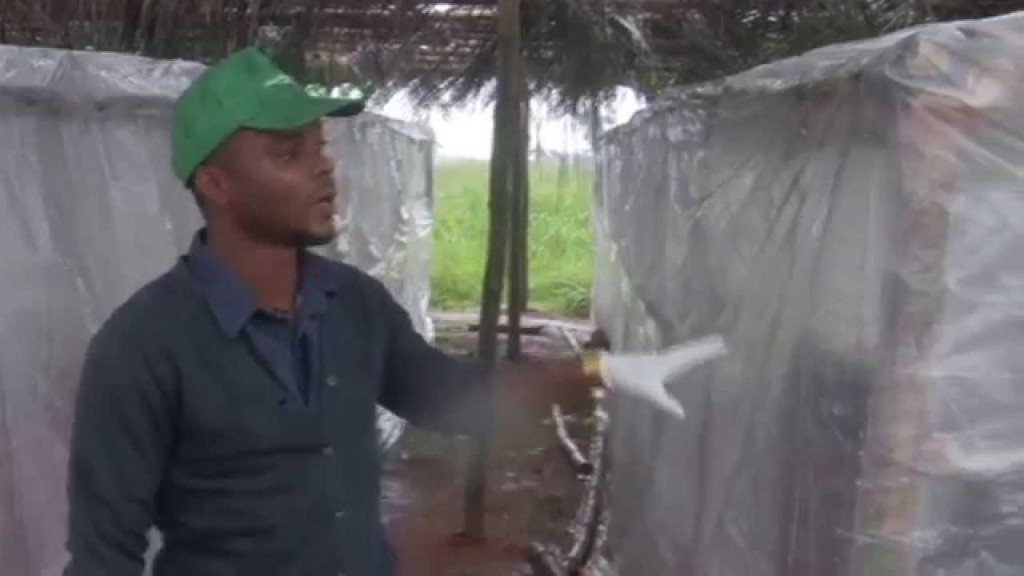
Planting of rice using the DPS machine

By Agropreneur Nigeria - Associate, The Unknown Nigeria

Tolu while growing up loved Agriculture but wasn’t interested in taking up a profession in the sector, she was latter convinced by a close friend to study Medicine to become a medical doctor. After writing JAMB twice to study Medicine (but not offered admission), Tolu decided to take up soil science and land resources management offered to her at Obafemi Awolowo University (OAU), Ile-ife, Osun state hoping to eventually change course to Faculty of health. She however, fell in love with the course and made up her mind to continue.


Today she leverages on her work at the International Fertilizer and Development Centre (IFDC) to facilitate farmers on using latest modern farming technology (UDP) aimed at increasing N fertilizer use efficiency in rice production among other crops, her interaction with farmers has enabled her to understand basic challenges farmers face and help proffer solutions and advice.

Tolu shares her excitement about future possibilities for Agriculture in Nigeria, if competent individuals with proven track record for getting things done are brought in and put in charge of farming centres established in each state of the Federation. She also advised continuation but review of the process and approach used for the Growth Enhancement Support scheme (GES) of the last administration for optimal result.


Q1. Can you briefly introduce yourself? How was growing up like for you?

Ans: I am Tolulope Ayeyemi, I hail from Itaogbolu in Akure North LGA, Ondo state. I attended Christ the King Nursery and Primary school Akure and proceeded to Saint Louis Grammar School, Akure for my secondary school education after which I got admission to Study Soil science and Land resources Management at Obafemi Awolowo University, Ile-Ife, Osun state, Nigeria.


Q2. Can you please tell us how you came into farming/agribiz? Do you have a background in Agric? If No, Tell us why you considered agriculture?

Ans: Let me start this way, I had always loved agriculture, probably because my dad is a passionate agricultural science teacher and was my agric teacher at some point in secondary school, in fact I was a member of young farmers club in my secondary school however I wasn’t interested in taking up a profession in the agricultural sector. I had always wanted to be in the health sector, at first, I desired to be a Nurse but a very close friend convinced me to go in to Study Medicine and become a medical doctor, however things turned around when I was offered Agricultural economics and Extension at University of Ibadan at my first JAMB attempt. I didn’t take up the offer because I wasn’t interested in Agriculture as a profession. I took the next Jamb, this time, I was offered Soil Science and Land resources management at Obafemi Awolowo University, I didn’t have so many choices anymore and I had to take it with the hope that I will cross over to Faculty of Health sciences the next session or better still put in for another Jamb. I did put in for the Next Jamb, however I already made up my mind to continue with studying Soil science. During the university days as well, I was opportune to travel to Songhai farms for a training on integrated and sustainable agriculture, this further ignited my passion for agriculture and today am so happy to be a Soil scientist/Agronomist.

Q3. What aspect or nature of work in Agriculture do you practise in your work? Tell us about your interactions and experiences with farmers in your work?

Ans: Right from my university days, I have been involved in capacity building of smallholder farmers in different aspects. As an Harambe Nigeria fellow, myself and eight other young agri fellas worked with farmers in a particular commodity in Osun state and trained them on safe handling of pesticides, processing of their cassava into garri and storage/preservation of their vegetable products and fruits. It was quite an interesting experience. And for some years now, I have been involved in training farmers on improved/modern farming technologies through the establishment of demonstration plots which is thereafter used as a practical platform to train farmers. I have also been involved in training of youth spray service providers (YSSP) on safe and responsible handling of agrochemicals which includes both classroom facilitation as well as field demonstration. Moreso, I am also involved in the training of Agro input dealers for effective service delivery of agro inputs to farmers. Generally speaking, my activity centers around capacity building of major stakeholders in the farming community- smallholder farmers, agro dealers, spray service providers also called spray gangs.

Q4. What societal problems are you solving with your work and what solutions are you using in technology and practises? What are the hurdles currently being faced?

Ans: My activities have been solving problems that relate to environmental pollution from incessant application of agrochemicals, as well as helping farmers increase their yield through the use of improved technologies they have received training on. The challenges being faced is that farmers are somehow difficult to convince about the use of a new/improved technology and this is why the concept of demonstration plot is used when training farmers.

Q5. What do you think about youth participation in Agriculture?

Ans: In recent times, there seems to be an improvement in that regard probably because of the issues surrounding the oil and gas sector at the present moment. In addition, there are a number of similar activities just like Agropreneur Naija who are also involved in sensitizing youth in agriculture. By and large, I think youth participation in agriculture is on the increase. I have a number of young friends who are also involved in agriculture in one way or the other- production, processing, capacity building, marketing and lots more, however, it will be very interesting to see more youth venture into agriculture, the older generation are gradually fading off and the baton has to be taken by the young people.

Q6. What do you think are challenges of youth participation in agriculture, how has this affected Agricultural productivity in Nigeria?

Ans: One critical challenge about youth participation in agriculture is the drudgery. Ask youth about agriculture and the excuse they give is that it could be stressful, truth be told, yes, infact sometimes at the peak of the season, I get stressed up as well but tell me, which job doesn’t have its own kind of stress? Secondly, funding is also a major challenge, there’s no business that can run without some capital. Furthermore, the generation of youth we have these days are somewhat impatient, no matter the crops/animal you raise, it will take some time to get to maturity for sale and get some profit, and however youth are not interested in that kind of waiting, and they just want quick money.
Checking maize seedlings for pest attack
Q7. Where do you see yourself in the next 5- 10 years from now?

Ans: In the next 5-10 years, I desire to own my personal commercial farm that will have both plant and animal section. I will also continue building the capacity of farmers most especially women farmers and I desire to be a mentor to female Agropreneurs.

Q8. What advice do you have for young people engaged in agriculture?

Ans: Agriculture is a very broad sector, my advice is they should be focused and get the best out of the aspect they are focused on, ask questions and get more knowledge.

Q9. What do you think government should put in place to improve the agric sector in Nigeria?

Ans: I am of the opinion that through a sort of public private partnership, the government of each state should establish modern farming centres with the kind of capacity and infrastructures that the popular Obasanjo farms has and employ people both skilled and unskilled labour to work there. I am assured that if this is done, aside providing employment for a good number of people, food production and distribution will also be increased. Aside this, government should put forward policies that will favour the small holder farmers and help him be able to sell his farm produce at the best market price. In the northern part of the country, more irrigation schemes should be constructed to enable farmer’s crop during the dry season. Furthermore, the growth enhancement support scheme (GES) of the last administration in which agro inputs were distributed to farmers at subsidized should continue and be made sustainable, however the process and approach should be reviewed in order to achieve optimal result.

Agribusiness Incubation: A Young Agropreneur’s Story, Post Incubation


By Agropreneur Nigeria - Associate, The Unknown Nigeria

This month we bring you a model youth of the IITA youth Agripreneur who was mentored to see Agriculture as a business. Today he has moved on to make for himself a growing and thriving business in plantain, banana and pineapple sucker production and multiplication among others, he distributes his suckers to various locations across Nigeria while he also helps farm setups both in Nigeria and diaspora with their farm management and setup. He also gives training on the production and business aspect of his mandate crops.

JohnBosco has since realized that picking agriculture as a business is the only work of life that is capable of giving massive percentage return on investment with eye-catching cost benefit ratio and higher curve of income, only if seen as a business. He thanks IITA for taking the lead to walk the talk on Youth in Agribusiness in Africa and encourages the Private and Public sectors and the world to rise up and walk the talk with proactive measures to help Youth see Agriculture as a business.

JohnBosco advices young people who have failed before in their agribusiness not to see it as a setback as every time invested in business has an impact and enables us see ways doing business in a particular way would’nt work.

In this piece he reveals how he started and projects he is currently working on in the value chain and discusses challenges faced as it relates to youth engagement in Nigeria.

Q1. Can you briefly introduce yourself? How was growing up like for you?

Answer: My name is Ezemenaka Johnbosco, preferably called Bosco by fans. I come from Anambra state, born and brought up in Ibadan. I grew up as a normal child with passion for business and development, but with no formal foresight of what sector of business I wanted as a child. Now, I’m the C.E.O of AgroBosco – Agribusiness and Consulting, Founder – International Forum for Youth in Agribusiness ‘IFYA’ (a virtual non-formalized platform), Agribusiness Analyst for Aroms Farms Nigeria Limited and Program Manager for McPennin Nigeria Limited.

Q2. Can you please tell us how you came into farming/agribiz? Do you have a background in Agric? If No, Tell us why you considered agriculture?

Answer: I have an Agricultural background in Soil Science and Land Management, Agricultural Extension and Rural Development. There’s no doubt I had the background from a Federal Agricultural University, still I had no clue of what aspect of life I was going to make that money from, even as at my fourth year as an undergraduate. I eventually graduated and as luck would play its role, I found myself in International Institute of Tropical Agriculture as my place of primary assignment as a Youth Corper serving my nation.

I was mentored and spawned to see Agriculture as a business. From there, I gained momentum with a crystal clear vision and goal to my independence and self-sustainability, so I decided to scramble for professional experience in Agribusiness Development, Business and Entrepreneurship, Civic Leadership, Public Management and Leadership.

Picking up Agribusiness as my part of life is simply because Agriculture is the ONLY work of life that is capable of giving you massive Percentage Return on Investment with eye-catching Cost Benefit Ratio and higher Curve of Income, only if seen as a business.

Q3. What aspect or nature of work in Agriculture do you practise? Briefly, Tell us about your work?

Answer: With practical experience in maize seed production, soybean seed production, cassava production / stem multiplication, plantain / banana fruit production and rapid sucker multiplication using macro-propagation technique and pineapple production / rapid sucker multiplication, this has helped me setup my own company. I give trainings on the aforementioned crops, help clients near and in diaspora set up farms and management, help develop Agribusiness companies in line with their business strategies to meet their business goals, help develop business plans, project plans and proposals with groovy and keen attention in Agri-start-ups for Youths.

Q4. What societal problems are you solving with your work and what solutions are you using? What are the hurdles currently being faced?


Answer: I have been giving trainings on the production and business aspect of my mandate crops to Youths and Farmers for self dependence, sustainability and enhanced income. Since commercial banks hardly finance Youths to start their venture, I’m working on providing Agri-finance with the Co-Founder of International Forum for Youths in Agribusiness – IFYA through ‘crowd-funding’ (micro fund raising through our members on the IFYA virtual platform) to set up Agri start-ups (maximum of $26,000 USD with an approved business plan).

Q5. What do you think about youth participation in Agriculture?

Answer: Youth participation is Agriculture is just the tool-box for significantly increasing food security, reducing world poverty and unemployment to ALARP level. Statistically, Youth make up the highest percentage of world’s population density with significant physiological and morphological capacity capable of deactivating the world time bomb. There’s no two ways about using Youth as a veritable tool.

Q6. What are the challenges of youth engagement in agribusiness as it relates to what you do, How do you think it is affecting Agricultural Entrepreneurship in Nigeria?

Answer: There are numerous challenges faced by Youth engaged in Agribusiness. The primary and number one challenge is ‘change of mindset’, others are secondary. Youths should have their mindset changed about Agriculture, the Private and Public sectors should help Youth see Agriculture as a business. A proactive concept and programs with strong Monitoring and Evaluation should be developed in all continents to tackle this and not just financing start-ups for Youths. Special regards to the IITA’s concept of Youth in Agribusiness, as a model in Africa. I tell you this; if you give a Youth $1 billion for an Agribusiness venture without having his/her mindset changed about seeing Agriculture as a business and the prospects attached to it, then you just poured water into a basket. I know there are so many programs and concepts about changing the mindset of Youths towards seeing Agriculture as a business, but the world has to rise and walk the talk with proactive measures. More regards to IITA for taking the lead to walk the talk on Youth in Agribusiness in Africa.

In Nigeria, this has greatly affected negatively, considering the teeming Youth population moving into Nigerian labour market quarterly, and then you can figure out how devastating this is in Africa, having Nigeria as the most populous country in Africa. Just figure it out! Example: My friend ‘A’ is comfortable working as a freelancer with a bank and receiving a limited token as salary, while my friend ‘B’ quitted his freelancing ICT job for just a commodity in Agribusiness and now making fortune with unlimited revenue and profit generation.


Q7. What advice do you have for young people engaged in agriculture?

Answer: My advice for young people engaged in Agriculture is to see it as a business. Only then will they realise the fortune that awaits them. In business, every time invested has an impact. Failing is normal in life, but they should NEVER see ‘fail’ as a setback in any of the value-chains of Agribusiness they are into, but rather see ‘fail’ as a finding of ways that don’t work.

Q8. What do you think government should put in place to improve the agric sector in Nigeria? Suggest Advice

Answer: Nigeria government should; 1. Take Youth as a tool-box for development of the Agricultural sector. 2. Work on changing the mind-set of the Youths through Non-Governmental Organizations and private sectors who are walking the talk and proactive, and embracing these organizations with resources needed. 3. Significantly reduce the interest rates on loan and to make it easily accessible to the common Youth. Government should be proactive about the aforementioned using aggressive and diplomatic Monitoring and Evaluation framework base approach.

Here is a Youtube video of Johnbosco talking about Plantain Macropropagation in Nigeria.

Contact him via boscowjay@yahoo.com or Blog

Rise of an interior design entrepreneur


Innovation is critical to the success of interior design business. The Chief Executive, Blue Mahogany, an interior design outfit, Omon Anenih-Mordi, is aware of this. The entrepreneur is, therefore, riding the crest of innovative ideas and skills to delight her customers and change the face of interior design business. DANIEL ESSIET reports.

THE has become a household name in the interior design business. Among the rich and famous, the Chief Executive of Blue Mahogany, an upscale interior design outfit, Omon Anenih-Mordi (a.k.a OaM), has carved a niche for herself in the interior design business.

With an increasing clientele, sustained over the years with innovation and quality service delivery, Anenih-Mordi has become an entrepreneurial sensation, and she appears determined to remain in the driving seat of interior design business in the country.

Her customers are mostly celebrities who engage her services to transform their homes. They are drawn mostly by her exquisite, eye-popping designs and professional advice.

But Anenih-Mordi’s rise to fame and fortune in the interior decor busniess was not instant; she had always loved the business right from her young age. This was why after her degree, she decided to home her skills by enrolling for a design training in the United Kingdom (UK).

Since the completion of the training, she has never looked back. The innovation and skills she acquired from the training, which she has brought to bear on the business, has made her one of the most sought after in the crowded market for interior designers.

With a rare combination of beauty, brain and brawn, Anenih-Mordi has since incorporated Blue Mahogany Ltd. That was in 2006. She has been dedicated to the team ever since. Her international training and experience as well as her local knowledge has made her an invaluable asset to numerous project teams and a sought after expert in design, lifestyle and luxury.

Interestingly, the budding entrepreneur wanted to be a lawyer. Hear her: “Everyone told me I would be great at it (Law) and in theory, I was. I remember being in the university and negotiating an agreement with my landlady that involved a small discount if she would let me wallpaper my bedroom myself. Up until my mid-20s I still didn’t consider the possibility of design as a career. It wasn’t an option on my radar. For years I spent my days watching grand designs, and various home make-over shows. At some point, I read a book that planted a question in my head, one that I was never able to shake off. If I could do anything, what would I do? I knew then I wouldn’t be a lawyer.”

She said although, in her vision of herself as a petroleum lawyer, she was successful, but not fulfilled. “So I took some time to explore my passions, hobbies, and consider the things I would do for a living. Eventually the penny dropped and the rest is history, “ she said.

She had her challenges though. Like other start-ups, Anenih-Mordi said she started the business with nothing. Hear her: “I started with little to nothing really. Just as much as it took to register with Corporate Affairs Commission (CAC). Eventually I had to sell my car to pay rent, but that is a whole other story.”

Despite the initial challenges, her rare ambition to succeed paid off. With 16 full time staff, a team of free lancers and other consultants and professionals who collaborate with her from time to time, Anenih-Mordi has hit it big.

Today, she is in the position to mentor and counsel young entrepreneurs. Her advice to aspiring entrepreneurs: “Keep on learning. To be a game-changer you need to read, explore, experience, inquire, ask questions, experiment. Go through magazines, journals, books, blogs, exhibitions, everyday situations… anywhere you can learn, be inspired, challenged or given a question to ponder or a problem to solve.”

She also advised them not to be passive observers, but solution providers. She said she had made sacrifices to become a successful entrepreneur. “There are many choices I have made and continue to make. Nights I had to work late or mornings I had set out extra early. Holidays I haven’t gone on,“ she said.

She however, said despite all these, each day still brings a new satisfaction. “Sometimes it is just enough that I have gotten through the day and crossed a few things off my ‘to do’ list. Other times it is getting an email from an aspiring designer or hopeful entrepreneur who wants to know how I did it and then I think to myself, I did it,” she stated.

She also said in her rise to fame and fortune, one of the biggest things she detested was mediocrity. “To be successful you have to give up ‘ok’ in exchange for ‘excellent’ or at the very least, ‘better’,” she said.

http://thenationonlineng.net/rise-interior-design-entrepreneur/

Tuesday, 5 July 2016

GMOs? YES WE ALL HAVE A STAKE!!!


By Opuah Abiekwen 


Why should the Government want to plot such an evil on us? So asked Timothy, a farmer I met some days ago in a farm behind Asokoro district Abuja after he heard so much negative stories from the critics of GMOs.

Timothy, like so many other farmers and consumers in Nigeria having heard so much myth about GMOs wants to reconcile the fact that the Government of Nigerian could plot an evil against its citizens as he was made to understand by critics of this technology, though this sounds hard for him to believe. It is obvious Nigerians are begging for the truth and if the truth is kept from us, we may make decisions that will either make or mar our growth in this Country.

This subject of GMOs and biotechnology recently has made headline discussions in various media houses, social media and among concerned individuals. As Nigeria make plans towards the commercialization of biotech products, it is important that the facts about such a controversial and heated subject be available at the door steps of every Nigerian to enable us make informed decisions on the technology.

Here are 10 Points I researched from this ongoing-debate around GMOs.

  • GM crops are developed by inserting genes from related or unrelated plant species into another to enable them resist certain factors such as drought, pest and disease. Yes, All Plants have genes! And those genes are exchanged where normal agricultural techniques like layering, budding, grafting is practiced.
  • Bt (Bacillius thuringenesis) is a non-harmful bacteria found in every soil. It grows with every plant and confers some amount of resistance to insect in such plants. Bt crops are developed when genes from these Bacteria are inserted into such crops to confer additional insect resistance to them. Eg Bt maize, Bt cotton, Bt. Cowpea.
  • Crops are enhanced to improve their nutritional value, thus meeting our nutritional needs. E.g in vitamin A enhanced golden rice; genes from carrot are used to enhance the Vitamin A content.
  • Crops are also enhanced to be resistant to harsh climatic Conditions like drought and flood example is the Nitrogen Use Efficient, Water Resistant and Salt Tolerant Rice (NEWEST) Rice that can thrive in Nitrogen deficient and low weather environment.
  • GMOs do not necessarily cause cancer as reported by critics as several regulating authorities including WHO, U.S FDA, FAO and OECD, e.t.c have approved of the safety of GMOs to humans and the environment.
  • All most all conventional foods are not 100% risk free, potatoes contains some amount of solanine that can cause neurological disorders, groundnuts contain aflatoxin, which can cause liver cancer, cassava contains cyanide which kills at raw consumption. This does not mean that conventional potatoes and groundnuts are dangerous to your health but the concentrations are so small to cause any negative health effect (the dose causes the poison) all this factors are taken into consideration.
  • Monsanto is a biotech corporation like Syngenta, Dow agro Sciences, and not the technology, as critics have made Monsanto synonymous with biotechnology, thus judging from a microscopic standpoint of Monsanto rather than the technology itself. Anyone with the capacity can own a biotech corporation and the benefits of biotechnology go far beyond Monsanto.
  • All pro GMO activist are not fans feeding from the pocket of Monsanto as claimed by many, how can all the plant breeders, world acclaimed bodies like WHO, U.S FDA, be paid by Monsanto to support evil in disguise of truth, without an individual of the millions of them having a right conscience?
  • Our Farmers will still have the right over the choice of their seeds, they can decide to grow conventional seeds, but if a farmer requires the added advantage of growing GM varieties, then the farmer has to purchase it from the seed companies and keep to the terms of contract of the company of purchase. It is really an issue of choice that is why the truth is paramount.
  • There are no commercially available GM crops developed yet in Nigeria. All that is available are seeds developed using hybrid technology and imported crops which have not be reported to be unsafe in anyway.
It is therefore obvious that this technology has huge potentials which our nation is interested in exploiting especially in agriculture, as the demand for food is on the increase due to escalating population of its citizens and the current challenges posed to agriculture such as climate change. It should be known that Agricultural biotechnology is not a scientific “be all end all” tool, it will not replace traditional breeding, organic farming, etc but will supplement all this other practices to put enough food on our tables.

It is also not a “saint science” without its negative aspects but the National Biosafety Management Agency was established to regulate this sector, so we can exploit the advantages while ensuring that it is safely practiced and deployed.

Agricultural Biotechnology and Genetic Engineering is an “Intervention tool” to address problems that ordinary breeding could not address and the choice of its deployment in Nigeria is due to its numerous advantages which outweigh its perceived risks and having a mechanism in place to Carter for this risks. Having this in place and moving towards the commercialization of the technology, the public require facts rather than falsehood, evidence rather than myths, the technology and not a corporation that will enable all make the right choice which will shape our future. It is however sad that awareness around this technology has really been shaped in a way that shields the facts, we should as citizens be open minded to information on this technology, channel our concerns to relevant authorities and be able to speak out when we find the facts. We have to know the truth, we all have a stake.

Opuah Abiekwen, a graduate of Genetics and Biotechnology, writes in from University of Calabar via AgropreneurNigeria.


AgropreneurNigeria - Associate of The Unknown Nigeria

President Putin Made Me Persona Non Grata In Russia, I’m Not New To Controversy! – Sunday Adelaja


Can we know you sir?


My name is Pastor Sunday Adelaja, Founder of Embassy of the blessed Kingdom for all Nations Church in Kiev, Ukraine. 

How did the Lord Minister to you to start God Embassy Church?

I was on scholarship to the former USSR after I forgo my admission to the then university of Ife. On getting to Russia I got so disappointed because there were no churches and the whole country looked old fashion. Especially since I also had another scholarship to Columbia University in the USA. While I was murmuring and complaining a senior colleague of mine told me about God being a God of purpose. He challenged me to pray, which I did after two weeks of intense prayers, I had a three day encounter with Jesus appearing to me. He showed me leading a whole crowd of white followers in their thousands. To cut a long story short, that is what God has done over the years. By the time I was 33 years old I had built the largest evangelical church in all of Europe with 99% being while Caucasians.

As a spirit filled and anointed with the largest congregation in Ukraine can you tell us how it all started?

For the first 4 years, I could not get any white person to follow me, only blacks and Asians but I always felt that if God wanted me to lead Africans in Europe then why didn’t he leave me in Africa where we had more Africans in millions. After a series of breaking process in God’s presence I got a key revelation that led me to grow from 7 people to 1000 white people in a year. The gist of the revelation is that I must remove my suit, tie, and go to look for the poor, outcasts, and the down and out of the society. Instead of going to preach to them I needed to go demonstrate Gods love to them. To cut a long story short, the drug addicts, alcoholics and the poor started coming. God started delivering them, they never remained poor and outcasts. With time they became some of the most prosperous and successful people in the land. The church grew to 25.000 members in a short time. Glory to God. 

God has delivered and performed so many miracles through you in Ukraine. Can you share some of the experience with us


I believe the biggest miracle is the fact that God used me to turn around the political, social and economic landscape of Ukraine. At a point 34% of the local parliament of the capital city of Kiev including the mayor were coming from our church. Over 600 people from our church were in one government structure or the other, this led to an unbelievable persecution from the central government against me and our church. God used me to deliver over 10.000 young men and women from drugs and alcoholic addiction. Many of them eventually becoming business men and women, politicians etc. Of course I became the only man in the world leading 99% white Europeans of over 25.000 people, being a black person myself, especially of Nigeria descent. I had the opportunity to address the UN twice, probably the only African who addressed and prayed in the US senate etc. 

What is it like overseeing a ministry like yours in Ukraine?


It’s all about being a servant. But all the above achievements are nothing compare to what God is going to do in my future. I believe my 30 years of sojourn in Europe is only my training ground and a preparation for what I must do in my own continent, and to my own people. I prayed for 20 years that God will allow me to at least do a fraction of what God did through me in Europe in Africa to my people in Nigeria in particular. 

Recently, there are some controversy in your ministry, what are your views and opinion on it?

When I announced I was moving back to Africa for good, there were a lot of mixed reactions amidst the leadership of the church. Some felt betrayed, others want the members, another group wanted the building etc, just human nature came to surface big time. These led to stories upon stories simply to blackmail me into granting some people’s desire. However, that is long dead and buried now. The publications that came out first came out in America people planting stories as if I made a statement which I was not aware of at all. They used my name to lie against myself, meanwhile no one actually spoke to me or took an interview from me at all. 

Is it true that you consented to the allegations of adultery against you in Ukraine?

The story in the newspapers said I went to a meeting with some Russian denominations where I conceded to some allegations. Those who know of my work in Ukraine will know that that is not possible because I have not being able to go out to Russia for the past 10 years. Since President Putin made me a personal non grata in Russia, so there is no way I could have gone to Russia to meet with some pastors or bishops more so since I’ve not left Ukraine for the past 7 years. 

We learnt you are coming back to Nigeria soon, what should your followers in Nigeria be expecting?

Yes, I’m coming to Nigeria soon, but don’t know the exact time or date yet. I’m still fighting the Ukraine government to clear my name from all false accusations; hence I’ve not being going out of the country for the past 7 years. As soon as I clear my name, I’ll be moving back to Nigeria finally. Note that, I don’t have to move to Nigeria and I wouldn’t have if not for a specific instruction from the Lord Jesus himself who appeared to me with concrete assignment on what to come here to do. As to what my followers should expect, I have good news to all Nigerians, not only my followers but all Nigerians should expect something they had never seen before. The country is about to witness a major tsunami kind of encounter in our Christianity. 

My focus is not to build a church but to bring about a national transformation of all aspects of our Nigerian life. The church in Nigeria has done a lot of good work but not so good when it comes to transforming the society at large. Well, that is about to change! Believe me, this is not wishful thinking. This is where my anointing lies, I’ve done it before, I know how to do it and without fail Nigerians will all witness a dramatic change in our society very very soon. Right now, I already have over 200 white Europeans coming as my team to live here with me leaving everything to help build Nigeria. Yet, even that number is small, they’ll grow to over 2000 of them. Including Nigerians in diaspora. 

Who will be over seeing the ministry in your absence?

The church in Ukraine is not just one church. In the capital city alone we have over 40 churches, in the country over 400, and all over the world in 50 countries another 1000 churches. So Embassy Of God church is more like a movement rather than a church. However, the most fascinating part of it is that in our church every local church is independent, with their own names, budget, pastors, building, etc. They all relate to each other on a voluntary basis, and they come together under the umbrella of Embassy Of God Churches. No obligations apart from mutual love, and a common spiritual heritage in that they all come from the works of P. Sunday. The umbrella organization has a group of elders that are going to be overseeing the general movement while I remain the founder and the senior pastor no matter where I’m in the world. 

Any spiritual message for Nigerians?

Why only spiritual message. I don’t like to be put in a box of spirituality or of a pastor cliché. I don’t see myself only as a pastor, I see myself as all God needs me to be at any given period. So expect me not only to be speaking to the spiritual life of Nigeria and Nigerians. Expect me to speak to all aspect of the Nigeria life and society. Now to answer your question, I’ll like to tell Nigerians not to be in a hurry to throw away their passports. And if you are planning to run away from the country, my advice to you is not to be in a hurry. Just wait till Pastor Sunday comes into the country. You are going to be seeing what you’d never dreamed of seeing in this country before. By the grace of God, every single local government in Nigeria will be touched by the plans and transformational development we are bringing. Like I said people from Russian, Ukraine, Britain, Germany, Japan, America, etc are all following me to come back to contribute to making Nigeria a better place. So get ready! Get ready!! Get ready!!! And of course pray that God will release me on time. There is going to be a revolution in our land, the kingdom revolution my friends. For the love of God, church and nation. 


http://sundayadelajablog.com/president-putin-made-persona-non-grata-russia-im-not-new-controversy-sunday-adelaja/

Sunday, 3 July 2016

Nigeria’s shea butter production receives EU support


Nigeria’s shea butter production has received the support of the European Union.

A statement from the Standards Organisation of Nigeria indicated that the European Union through its expert on Technical Barriers to Trade, African Caribbean and Pacific countries’ programme, had started plans to equip Nigerian women with the requisite skills and support to boost shea butter production.

According to the organisation, Nigerian agricultural and allied products now have a major boost in regional and international markets following a recent harmonisation of standards exercise carried out by the Africa Regional Organisation for Standardisation.

It added that the harmonisation was a result of strident calls to make the continent’s agricultural sector competitive globally.

The statement quoted the Director-General of SON, Dr. Paul Angya, as saying that the organisation had made all arrangement to encourage local Shea butter production in Nigeria, adding that the next step was for the nation to prioritise its agricultural sector by making standards available for the sector.

He said, “We have discussed with the African Caribbean and Pacific –Technical Barriers to Trade institutions about supporting shea butter producers in Nigeria and when we go back home, we are going to inform them about the approval of the ACP-TBT project to impact immediately on shea butter production.

“Our agricultural and allied products now have a ready market in Africa. So, it is for us to go back and renew our energy in those priority sectors and teach our people the critical relevant sectors and the availability of these agricultural standards.

“The Small and Medium Enterprises must realise the importance of standards’ application to their own personal enterprises, the capacity of standards to improve their productivity and their profits.”


https://www.today.ng/news/national/146178/nigerias-shea-butter-production-receives-support

Saturday, 2 July 2016

Juliet Ehimuan-Chiazor: Profile of a humble achiever


This Interview by Guardian Woman anchored by Tonye Bakare brings to you the dynamic Juliet Ehimuan Chiazor ; Google Country Manager- Nigeria.

It’s a giant-sized technology behemoth spread all over the world and of course, filled with the male head honchos, but in Google’s Nigerian office, a woman is leading the pack and she is obviously doing well. Juliet Ehimuan-Chiazor may not be as popular as the likes of Sheryl Sandberg and Marissa Mayer, but as Google Country Manager in Nigeria, she has proven her worth as a top-rated technology and business leader with a long list of achievements to show for it.

“I would ascribe our accomplishments to great team effort,” she tells Guardian Woman. “My role is to lead the team towards a common vision and coordinate the great talent we have towards key strategic goals.”

As the head of Google’s operations in Africa’s largest Internet community, Juliet is charged with the responsibility of representing the company in all its business development projects and partnership opportunities in the region.

She holds an Executive MBA from the London Business School, a Post Graduate degree in Computer Science from the University of Cambridge, UK; and obtained a Bachelor’s degree with 1st class honours in Computer Engineering from the Obafemi Awolowo University, Ile-Ife. She is a recipient of the London Business School Global Women’s Scholarship, and at Cambridge University she received two scholarly awards – Selwyn College Scholar and Malaysian Commonwealth Scholar.

Prior to her appointment at Google, Juliet was the General Manager, Strategic Business Units of Chams Plc where she was responsible for leading and formulating strategies for Chams Strategic Business units. She also worked with Microsoft UK for 6 years, initially as a Program Manager managing Strategic Projects for MSN Europe, Middle East, and Africa (EMEA); and then Business Process Manager for MSN International covering 11 subsidiaries worldwide. She received the Microsoft “Ship-IT” award for successfully launching the new MSN online subscription business in the UK, Spain, Italy, and Germany.

Her early career was at the Shell Petroleum Development Company as Performance Monitoring and Quality Assurance Supervisor from 1995 – 1997. She is also a pioneer member of the Academic Computer Network for Developing Countries sponsored by the International Centre for Theoretical Physics (ICTP), Trieste, Italy in 1995; which resulted in a Campus-wide area network at OAU Ife.

In 2005, she left Microsoft to start Strategic Insight Consulting Ltd UK, focused on providing collaborative programmes that connect African Business leaders and Professionals with their global counterparts.

Moving to Google as Nigeria’s Country Manager was both fortuitous and deliberate at the same time. After schooling and working for 12 years outside Nigeria, she moved back to the country because she felt she could do more to drive technology-enabled growth and productivity. Two years after moving back, she joined Google and saw it as a great opportunity to make a difference with technology.

Under her leadership, Google Nigeria has launched a series of innovative products and services aimed at building the online ecosystem in Nigeria through a three-pronged strategy – (1) driving initiatives around Internet access to make the internet more available and affordable to the Nigerian user, (2) facilitating local content development, and (3) building capacity.

“One of our key focus areas has been local content creation because the Internet would be more useful for people, if they can find locally relevant information. To this end we have deployed a number of products and programs to support the creation of local content. For example in 2011, we launched a nationwide program called Get Nigerian Businesses Online. As part of this program, we provided free and easy tools that any business owner could use to create a website in a couple of hours, and also get listed on Google Maps,” Juliet said. Adding “we have evolved that program over time and currently run a Digital Business Manager (DBM) programme. This programme leverages Google’s third-party model to grow the digital ecosystem by supporting businesses in their online journey.

Google is also helping to get Nigerian movies, music, arts, fashion shows, educational content, news, sports, etc. on YouTube in its bid to promote local content from Nigeria. Youtube.ng was launched in 2011 – the year she was appointed. This localised version of YouTube provides a good platform for Nigerian multimedia and video content creators to showcase Nigeria’s rich cultural, social, educational, Journalistic, entertainment and other relevant content. And Google has been signing up local partners and entrepreneurs who are generating revenue from their content on Youtube and tapping into the export market as the Internet enables you to cross geographical boundaries. “We are seeing a new generation of entrepreneurs creating entire business models based on the web, from content creation on Youtube to online publishing, and eCommerce” she said.

In the area of affordable access, one initiative, she said is the Google Apps Supporting Programme for Nigerian higher institutions through which funding and technical expertise is provided to higher institutions to support them in building their campus network infrastructure. “We have successfully deployed Google Apps for Education software for free to over 40 academic institutions in Nigeria, and assisted 10 institutions with funding to pay for international bandwidth over a period of time,” she said.

To ensure a sustainable ecosystem, Google is involved in building capacity in Nigeria by training developers, students and businesses on how they can build great Apps, promote their businesses online, and enhance the quality of learning through access to global libraries of information on the Internet. Adding “another capacity building initiative which we announced in April this year and are very excited about is our commitment to provide free digital training to 1 million Africans in one year; through a combination of online e-learning modules, and offline classroom training. So far, about 100, 000 people have been trained offline. As part of this initiative, we are also collaborating with the Lagos State Government to train 50,000 students in 3 months. We believe that if people have the right skills, they will be more employable, empowered to build their own businesses and create jobs, and participate in the digital economy.”

As a woman in technology herself, Juliet believes there is room for women to do more in the Nigerian tech space. She believes women can benefit from more support, knowledge sharing communities, and access to resources. With the immediate foregoing in mind, Google Nigeria, in commemoration of the 2016 International Women’s Day trained female entrepreneurs on digital marketing and organised a developer summit for women, Juliet said. Expatiating further she said “the digital marketing training provided female entrepreneurs from different fields of business with an expanded knowledge base aimed at improving their business performance using digital technology. The developer summit provided resources, mentoring, a code lab and design sprint to support female developers in building great products.

She said Google also has a dedicated programme for female developers – Women Techmakers – aimed at supporting women in technology. Women Techmakers launched in 2014, is also focused on empowering women in their careers by providing access to curated resources and events, as well as information and tools from Google, our partners, and the global tech ecosystem. She said Nigerian women can tap into Google’s gender friendly programme by simply registering at www.womentechmakers.com.

She recognised the increasing leadership role women are playing in the technology space in Nigeria. With about 35 Google developer groups spread across Nigeria and 10 dedicated female developer groups, leading positions in online publishing and technology companies, Juliet said Nigerian women are contributing immensely to development.

With Nigeria being the largest Africa’s internet community, a lot of which is hinged on mobile telecommunications technology – most of which are powered by Android, a Google product – Juliet has her work cut out for her. She’s enjoying the challenges that come with her job but may not rule out delving back into Entrepreneurship down the line.

In response to the question “as a role model, what advice do you have for women” she said, “I won’t necessarily call myself a role model; but I will advise every woman to set a clear vision for herself, believe she has what it takes, and develop a plan to get there. The plan can include learning required skills, leveraging coaches or mentors, developing partnerships, etc.” Regardless of her tough job, she said she strives to ensure that a healthy work-family life balance is maintained.

“Having great family support has helped me to manage my family and work. Some people give that impression but I’m by no means superwoman. The robust support from my family in general has made all the difference in being able to maintain balance and I think that is key when you’re raising a family.” She added “it also helps that Google provides a flexible, supportive, and convenient work environment.”

“Moreover, I’m an early person and so I try to get a lot done in the early hours of the day before getting into other matters that consume my time.” And how does someone like her relax? Picture her on a dance floor, then you probably may have an idea. She enjoys music, dance, and theatre.


http://guardian.ng/guardian-woman/juliet-ehimuan-chiazor-profile-of-a-humble-achiever/

Friday, 1 July 2016

KUNLE AFOLAYAN: Persistent display of unrivaled brilliance in movie production


By Kemi Ajumobi

Kunle Afolayan is of Igbomina- Yoruba descent, from Kwara State. He is the son of the famous theatre and film director and producer Ade Love. He majored in economics and started out working in a bank while doing some casual acting, before deciding to move into full-time filmmaking and taking a course at the New York Film Academy. Since 2005, he has been active in the Nigerian film industry. He has made several extremely popular titles including: The Figurine: Araromire which was in the Yoruba and English languages and Phone Swap which featured Wale Ojo, Joke Silva, Nse Ikpe Etim and the legendary Chika Okpala. The Figurine won five major awards in the African Film Academy and experienced tremendous success in the Nigerian movie theatres.

Kunle Afolayan appeared at the Subversive Film Festival in 2011 where he represented the second largest film industry in the world, the Nigerian film industry, with his colleague Zeb Ejiro. In May 2013, Phone Swap premiered in France at the first edition of Nollywood Week Paris and won the Public Choice Award. Afolayan’s father Adeyemi Josiah Afolayan (Ade- Love) was a renowned Nigerian artist of the second half of the 20th century. He worked in traveling theatre and turned to the film making industry. Afolayan’s father felt strongly about education and therefore Afolayan completed his studies in accounting. His award winning movie October 1st was released in 2014 and in 2016, another intriguing one is set to hit our screens titled The CEO. Kunle is a recipient of several awards and was recently awarded an honorary Calgarian certificate and the Chief White Hat, making him a member of the city of Calgary, Canada. Kunle is married to Tolu and they have 3 kids.

Early years

Growing up for me was normal. It wasn’t easy. I didn’t grow up with a silver spoon. My family was just an average family. Whatever we see on the table is what we eat. My father married many wives and we the children were many as well. The street was part of the place I learnt things. I guess that was what made or part of what made me to be who and what I am today. It helped to shape my thinking and my ideas for the movies I produce today.

Journey into movie making

I started acting in 1998. I started my own company in 2005. First of all, I retired as a banker, then, I went into acting and later into making my own movies.

Movie makers have their peculiarities

Everybody has their own ideas and what prompts them to make their movies. It’s what and how they think that makes them produce the movies that they do. Everybody can’t think the same way or alike.

Secret to your successful movies

Truth is there is no secret. I do a lot of thinking. My mind does a lot of thinking. I look at the way things are, the things happening around me and I don’t stay idle. Just barely from thinking alone, I construct movies in my mind. My background and where I am from also influences the movies I create. Whenever I want to produce a movie, I make sure that I leave people thinking, I make them ask questions, I usually don’t conclude my movies, I let viewers talk about it, I leave them wondering. I try not to entertain alone but also to get them thinking.

Choice of characters in your movies

Once I have a script, I already have an idea of what I am looking for. Sometimes, I already have established actors in mind. Sometimes, I just want to throw it open and have new characters come try their luck. It’s important that you must depict the characters that you want. Even if you don’t have all of it, once I see an element in you, I can groom you.

After October 1st, did you fear expectations for your new movie?

No I don’t fear anything! Most times, I have movies in mind. Just like now, I have 2 to 3 movies already in my head. Really intriguing movies. So I have no fear whatsoever.

What was different in production of October 1st and the CEO?

October 1st was a good movie. It got people thinking and asking questions. So also the CEO as well, it’s a really fascinating movie. Something that will keep you on edge and make you ask lots of questions. Both of them have good productions. Everything about both of them was good.

The CEO

It is a movie full of intrigues and suspense which all begins after five top executives embark on a week-long business trip. The trip was intended to elect the new CEO for the company but things turned out differently. The mystery begins to unfold when the executives arrived at their destination for a business meeting and suddenly began to die one after the other through mysterious circumstances, leaving only two behind, a situation which led to suspicions.

Cost of producing CEO and official release

The cost for CEO is around 2 million dollars.

The official release is going to be on the 15th of July. That is the cinema release.

Cost of producing October 1st and how much did you make after the release?

It cost about 2million dollars as well. I can’t really lay my hands on how much I really made from the movie. I guess I made quite a lot but can’t say precisely.

Endorsements and alliances

At the moment, I am brand Ambassador to Air France, Peugeot Nigeria and Hebron (they own an estate). It’s a good thing that these industries are seeing value in Nigerian films and industry. It’s something that is really good for the industry and majority of them are not even Nigerian companies. They have their head office outside of Nigeria and they still see the need in engaging and adding value to Nigerian film industry.

Advice to actors, producers, directors who are discouraged and struggling

My advice would be that they shouldn’t give up, be persistent and put in your best.

How can film makers truly make money for their gift?

I think producers should look at the way things are in Nigeria first. Even those producers that studied abroad, they should also assess the environment first, then add the ideas together. It is not enough studying abroad, it’s necessary that you look at the environment you want to produce that particular movie. It’s not enough making movies, but then you should take into consideration what the viewers like and their expectations. This would help tremendously.

Influence of Nigerian economy on film making?

The economic situation is of course not easy but then, I thank God for those industries that help to support the film industry. Truly, it hasn’t been easy. The economic situation hasn’t been fair too but God has taken full control of all of it.


https://businessdayonline.com/2016/07/kunle-afolayan-persistent-display-of-unrivalled-brilliance-in-movie-production/