Tuesday, 19 May 2015

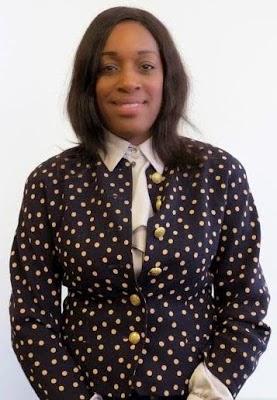
Sosoliso Plane Crash Survivor Kechi Okwuchi Graduates With First Class Honours


Remember the Sosoliso air crash in December 2005 that claimed many lives? One of the two survivors of that fatal crash - Kechi Okwuchi has just graduated with a First Class Honors in Economics & Marketing from St Thomas University in the United States of America. She was also inducted into the academic honor society due to her outstanding performance as the best graduating student in the department of Economics.


Monday, 18 May 2015

Meet Nigerian woman who has no formal education but lectures at Harvard, other top varsities


Not many in her homeland appear to know about her unique story. But in other lands, especially Europe and America, she is a ‘goddess’ whose works are cherished by kings and presidents.
Without a doubt, the story of Nike Okundaye, the face behind the huge success story of Nike Arts Gallery, located in Lagos, Abuja and Osogbo, is as compelling as it is inspiring.

At a time when young Nigerians are in desperate need of a role model and inspiration in what self-belief and hard work can achieve, Nike’s rise from the status of an unknown village girl born into a seeming insignificant family in a rustic village to a globally celebrated icon would make an A-list inspirational novel.

Born in her native village of Ogidi, Ijumu Local Government Area, Kogi State, young Nike had high dreams about what type of future she wanted for herself. But her dreams were truncated even before they could take form when she lost her mother at age six. “I was six when my mother died,” she said with a tinge of sadness.

With the blow inflicted on her dreams by her mother’s death, young Nike was taken away to live with her grandmother. At the time, many believed that by going to live with an old woman, the young girl’s future had been compromised. But events have since proved that destiny may indeed have been at work in her journey through life.

She had her first contact with the world of arts through her grandmother, who at the time, was the leader of cloth weavers in the community.She said: “I come from a family of craftsmen. My parents were crafts people from Ogidi in Ijumu Local Government Area, Kogi State. My life as an artist is something that I was born with. I started weaving at the age of six. “I started with weaving different things, including adire, a traditional Yoruba hand-painted cloth design. As a matter of fact, I can say everything that had to do with textile. They taught me how to weave, using a little calabash. Gradually, I graduated to using bigger materials.”
Though Nike was six years old and barely able to tell the difference between her left and right hands, she already had a picture of the kind of future she wanted.“My grandmother was the head of all the weavers in our community. So, even as a little child, I already had a dream that I would own a big studio when I grew up. People came from different areas to buy the cloth from her. So, at that time, I already sensed that I might not have the opportunity to go to school.”

With the death of her mother, her grandmother, whose responsibility it was to look after her, did not pamper her in any form. She ensured that the virtue of hard work was instilled in Nike’s young, impressionable mind.

At that time, young Nike, unaware of the reason behind her great grandmother’s action, would cry, believing that she was being unnecessarily punished. “I would cry and lament because I thought she was wicked and punishing me. But today, I always thank her for inculcating in me the virtue of hard work. It was through her that I learnt that you must persevere in whatever you do and never give up on your dreams.”

Although she lost her mother at a time she needed her most, Nike believes that destiny might have been involved in the way her life played out, including her mother’s death. According to her, the mother was a very hard working young woman who would have spared nothing to ensure that her child got a good education up to the university level.

“Even at that young age, I knew that my mother was very hard working. And I am very sure that if she had not died, she would have trained me up to university level. My father was a farmer. He also did several other things like basket weaving to supplement his income. So, definitely, I would have been educated very well if my mother had not died. “But today, I look at my childhood and all that I went through as something designed by destiny. Who knows, maybe if my mother had not died and I had gone ahead to be educated, I may never have had the kind of opportunity that I have today and may never have risen to the level that I am.”

Nike never went to school to study art, the vocation that has brought her to global spotlight. 

Vocational training in art was passed down to her by her great grandmother, the late Madam Ibikunle. Watching her great grandmother in the art of adire textile processing and helping her out, Nike walked up the line to become an expert in adire making, dyeing, weaving, painting and embroidery.

A product of the famous Osogbo Art Movement, Nike is today a world acclaimed artist and textile designer. She brings vivid imagination as well as a wealth of history and tradition into the production of adire. Her works are celebrated in major capitals of the world, with her designs exhibited in countries like the USA, Belgium, Germany, Japan and Italy, among others.

Nike spent the early part of her life in Osogbo, a recognised hotbed for art and culture in Nigeria. During her stay in Osogbo, her informal training was dominated by indigo and adire.
Nike’s romance with international exposure began in 1968 when she had an exhibition at the Goethe Institute in Lagos. Since then, she has grown to become a major name on the international art circuit. She is most outstanding in paintings and design of adire, beadwork and batik.

Among Nike’s proudest achievements was her invitation to Italy by the Italian government in 2000 to train young Nigerian sex workers on how to use their hands to engage in creative ventures. Her invitation was as a result of complaints to the Italian government by the young Nigerians that they left Nigeria in search of work, not knowing what they would be forced into. When Nike got to Italy, she taught them skills in craft making and many of the women became self-reliant in no time and stopped their old means of income.

In 2006, she was awarded one of the highest Italian national awards of merit by the government of the Republic of Italy in appreciation of her efforts in using art to address and solve the problems of Nigerian sex workers in Italy.

About two years ago, her adire painting was accepted at The Smithsonian, the world’s largest museum, located in Washington DC, US. Some of her works can be found among-st the collection of prominent personalities around the world, including the White House.

While little is known about Nike and her works across the country, two former presidents of the USA, Bill Clinton and George Bush, were so enthralled by her works at various times that they sought audience with her during their visits to Nigeria. Much more than just meeting and shaking hands with the two former presidents, it was Nike that decorated George Bush’s room in Abuja during his stay in the country.

According to Nike, these two incidents, were some of the best things to have happened to her.
She said: “When President Bill Clinton of the US visited Nigeria, he asked to meet the woman behind Nike Gallery, and I was taken to Abuja to meet him. It was the same thing with President George Bush. I was invited to meet him in Abuja during his visit to Nigeria. I was the one that decorated the room where the president stayed during the visit. What honour can be greater than this? I feel accomplished.”

As an accomplished artist, Nike has taught in several universities in the US, imparting the knowledge of her traditional adire designs in thousands of eager students from across the world. Her teaching exploits, she disclosed, have taken her to revered institutions like Harvard and Edmonton in Canada.

“I have lectured and held workshops in several noble institutions across the world. Some of the universities include Harvard, Columbus, Edmonton, Ohio and in Los Angeles, among others. 

My first experience with teaching was in 1974. At that time, I taught people with doctoral degrees.”
Interestingly, all the education she had at the time, according to her, was the traditional education that parents pass onto their children.

“The type of education I had at the time was the education that is passed from parents to their children, not the education you get in a classroom. It was the practical type of education,” she said with a wry smile.

In 1983, she established the Nike Centre for Art and Culture in Osogbo, Osun State, where trainings are offered free of charge to Nigerians in various forms of arts. The centre was opened with 20 young girls who were picked from the streets and offered a new life in arts. So far, according to her, more than 3,000 young Nigerians have been trained at the centre.

The centre also admits undergraduate students from many universities in Nigeria for their industrial training programmes in textile design. The centre now admits students from Europe, Canada and the United States of America. International scholars and other researchers in traditional African art and culture also visit the centre from time to time for their research works on the processing of adire fabric and African traditional dyeing methods.

But she says the true story of the gallery started in her bedroom about 47 years ago.

“The gallery you see today actually started in my bedroom in 1968. In 2008, we opened the one in Lagos, and my husband was always the motivator. It was intended to give the young and old a platform to hear their voice.”

As she spoke, with signs of fulfillment splashed on her face, her husband, Reuben Okundaye, a retired commissioner of police, who had remained quiet since the interview started, suddenly joined in the conversation.

He said: “It is with practical education that she has continued to teach and impart knowledge into people with doctoral degrees and masters in Fine Art. Some of these people even come here under the cover of night to seek advice from her. Yet, some would say she is not educated.”

Speaking about another experience, Mr. Okundaye said he once had an encounter with a prominent Nigerian who told him that his wife would have been made a minister of the Federal Republic of Nigeria if she was educated. Surprised, he said he took a swipe at the man, telling him his wife was better educated than most of the people that were being flaunted.

He said: “You can imagine, I was discussing with one big man the other day and he said that my wife would have been made a minister if she was educated. I was angry and I asked him what he meant by that. Here is a woman who teaches people with doctoral degrees in higher institutions all over the world, yet you say she is not educated. But when the chips are down, they come to her for advice.”

Asked how she feels whenever she teaches in the classroom, Nike looked up as if relishing her achievements, and said: “I feel fulfilled. It was a very high sense of fulfillment. Imagine, a little girl who grew up in a rustic village without any sign of hope for a good future. Now I stand before PHD holders and teach them. I have been invited to meet presidents of foreign countries. I think I should be proud of my little achievements and be grateful to God.”

In spite of her seeming low education, she insists she has no regrets about not attending school. “I have no regrets at all. I give thanks to God for making all these things possible for me. I also thank my husband for standing by me all these years. I must confess that it was not easy coming this far. You will agree with me that for a woman to be recognised, she has to work three times harder than a man.”

Reechoing his wife’s position, Mr. Okundaye said Nike could not have had any regrets, having attained the heights sought by many across the world. “You asked if she has any regrets. How can that be possible? What kind of regret was she supposed to have with all her achievements? She is fulfilled in every sense of the word,” he enthused.

Expectedly, the couple was attracted to each other by their mutual love for arts.  “I have always been an arts lover. I have some of her works. Perhaps, like you said, maybe it was destiny that brought us together.”
With a sterling career as a police officer, which saw him attaining the rank of Commissioner of Police and serving in more than four states, the couple has in the last 20 years of their coming together enjoyed the beauty of marriage and weathered the storm together.

Nike, who would be 64 in a couple of weeks, has also successfully created an identity for herself. Her most treasured clothes, she confessed, are adire fabrics. And it is not surprising that she cannot remember the last time she wore anything other than that.

“You may be right if you say I have created an identity for myself with my adire clothes. It is the only thing that I am known with. I don’t wear any other clothe, even when I travel out of the country,” she said.

Acknowledgement: News Across Online Newspaper
http://newsacross.com.ng/meet-nigerian-woman-who-has-no-formal-education-but-lectures-at-harvard-other-top-varsities/

Saturday, 16 May 2015

Anambra–based mechanic fabricates N10m dredging equipment


The old spare parts market at Nkpor, near the commercial city of Onitsha, has virtually turned into a Mecca of sort following the completion of a dredging machine which cost about N10 million by a motor mechanic in the area, Mr. David Ezenwa. The equipment, which took five months to complete has been transported to Aguleri water-front in Anambra East local government area where it is expected to be put to use soon, Ezenwa’s workshop at No 5 Awgbu street, Nkpor was the cynosure of all eyes as people gathered to admire the equipment because of its size and sophistication.

Materials that formed the major components of the equipment include a 12mm metallic pan, 10 inch sand sorting pump, 10 cylinders Mercedes Benz engine, self loader sand sucking pump, blaster pump which helps to soften the sand, a sand cutter, another four cylinders 608 Mercedez Benz engine for the pump, a dashboard for electrical indication and pipes that carry the sand from the water to its place of deposit.

On completion, the equipment is almost the size of a small bridge. Ezenwa, who is from Abatete in Idemili Local Government Area of Anambra State, said his interest in fabrication started when he was young which was why he became a motor mechanic after leaving school.

He said: “I have a friend who is an engineer and is into machine fabrication and he advised me to go into equipment construction because he discovered that I am talented in the area.

On my own, I started assembling the materials after designing it. I developed interest in the dredging machine after seeing one in operation and determined that I would build it. “Despite the high cost, I picked up courage and started it in December, 2014 and completed it in May, 2015. The machine has been tested and proved to be in perfect working condition and arrangement has been completed for it to be mounted on the bank of Omambala River in Aguleri where it will be used for sand dredging.”

The dredging machine, Ezenwa said, has a pumping capacity of 300 trips of sand per day and has a discharging capacity of over 800 meters from the river bank where trucks can load the sands to various destinations. Though Ezenwa said he did not borrow money to complete the equipment, he explained that he could mass produce it if he was able to get financial assistance from government or financial institutions.

According to him, FINANCING the project was very difficult, adding that although some people had made inquiries about the cost for me to build the machine for them, they were discouraged by the enormous cost. “All these while, many people who came to this workshop were wondering what I was doing, but I am happy that despite the initial hiccups, we have been able to complete it to the glory of God,” he said.

Acknowledgement: Vanguard
 http://www.vanguardngr.com/2015/05/anambra-based-mechanic-fabricates-n10m-dredging-equipment/#sthash.moRrmoUw.dpuf

Nigerian Student Breaks A 50 Year Record At Tokai University Japan


Ufot Ekong, a brilliant 30 year old robotic and electrical engineer, recently graduated from Tokai University Japan as the best overall graduating student. This type of achievement was last witnessed 50 years ago in the university. 

Right from the start of his studies , Ufot Ekong had been identified as a student with great potential and truly he did not disappoint as in his first semester at the university, Ufot, solved a mathematical equation that couldn't be solved in 30 years.

In addition, he already has two patented products to his credit one of such is an electric car project which runs 80 miles/hour.

Ufot also emerged the winner of the Japanese language award for foreigners. 

Throughout his studies at the Tokia University, Ufot supported himself with two jobs on the side. Presently he works with Nissan and he has also commenced his PHD on a part time basis. 


                        Ufot displays his awards

             
    Photograph with the Nigerian Ambassador to Japan and other dignitaries


Vehicle built by Ufot

Monday, 11 May 2015

This Company Is Paying Nigerians to Learn Computer Programming


CHIBUZOR OBIORA WAS an out-of-work TV news anchor in Lagos, Nigeria when he came across a curious link on Twitter: a company was offering money to people willing to take a course in computer programming.

For Obiora, it sounded too good to be true. “I was always interested in learning [to code] because of the problem solving aspect of it,” he says, “and here was a firm that promised to pay you to learn.” But it turned out to be a very real opportunity.

The company is called Andela. It’s based in New York City, and it pays Nigerians to learn programming skills before putting them to work on projects that serve businesses back in the States. After about four months of training, Obiora now works under Andela as a web development contractor for an (unnamed) U.S. based organization—all without leaving Nigeria.

The ultimate aim is to tap the vast pool of talent found in countries that aren’t exactly known as technology hubs, including not only Nigeria but other parts of Africa. “We know that brilliance is relatively evenly distributed across the human population,” says Andela co-founder Jeremy Johnson. “In terms of pure aptitude, there are genius level people across the world. But what there’s not is equal opportunity.”

Today, U.S. tech companies aren’t shy about saying they have trouble finding programming talent. Critics argue this talent shortage has more to do with stinginess and selective hiring practices than a real lack of qualified programmers, but regardless of the reasons, the need is there. As a result, a new wave of services are working to train enormous numbers of new programmers.

The operations range from online tutorial services like Codecademy to the dozens of “code bootcamps” that promise to get people job-ready in a matter of months. Andela puts a new twist on the bootcamp idea by moving them overseas—and paying people to participate.

Students who finish at least 1,000 hours of training are then eligible to work as web developers for Andela’s clients, but they continue to learn new skills. Johnson says most students will spend about two-thirds of their time working for clients, and the remaining time on education. All told, both the students and staff work about sixty hours a week.

“It’s very similar to the way that guilds worked in the middle ages,” Johnson says. “YouGET PAID a small amount as an apprentice, then you work as a journeyman with lots of other craftspeople, and eventually become a master.”

Johnson says the company charges clients about half of what they would pay a domestic developer, and that students are payed a middle class income in their home countries throughout the program, including during the training period.

Acknowledgement: www.wired.com

Sunday, 10 May 2015

GLAMOUR, COLOUR, CULTURE TAKE CENTRE STAGE AS LAGOS CARNIVAL 2015 HOLDS


Glamour, colour, fun and beauty and a rich display of the culture of Lagos took central stage on Saturday as various groups representing diverse neighbourhoods, communities and selected associations in Lagos put up a masterful display at the Tafawa Balewa Square Lagos as the 2015 Lagos Carnival took place.

The State Governor, Mr Babatunde Fashola (SAN) while addressing the large crowd made up of participants in the carnival processions and the spectators at the stands in the TBS, urged all of the sponsors, the participants, the designers and manufacturers of the costumes to continue to work hard to expand on what the present administration has done.

The Governor described the day as a great family day where all the children, parents can come out, dance, sing, display and generally have fun, stressing that a nation that has so many young people needs many more of this kind of activity to expend the energies that it has and to channel them to productive purposes.

He thanked all those who have participated, those who have organized it, all of the many sponsors to whom the State Government is deeply grateful including the artisans, the costume makers, the tailors, the designers of all of the fabrics, all the workers in the various knitting centres,

Governor Fashola expressed the hope that the participants in the 2015 Carnival have all enjoyed themselves in spite of the delays prompted by the shifting of the elections that the present administration was determined to hold the carnival none the less.

He stated that this year’s edition is the last time he would be addressing the Carnival as the Governor at the annual carnival, expressing optimism that at next year’s Carnival, the Governor- Elect, Mr Akinwunmi Ambode would be present to keep the tradition going.

“We have built a great team and it couldn’t have happened without you, so for me, it is time to say thank you all very much, you have been wonderful over the years and it is also time to say bye- bye, God bless you”, the Governor added.

The various contingents of the participants had earlier gone in a procession through different routes like Bourdillon Road-Giwa Barracks- Falomo Roundabout- Awolowo Road,-King George V Road-Bamgbose –Campos Square- Catholic Mission Street to the Tafawa Balewa Square.

The participating adult Carnival groups include, Lafiaji, Epetedo, Oko Faji, Locomotion, Obalende, Isale-Eko, Ogba, Woro Group, Ikeja, Emerald, Surulere, Ilasamaja, with many of the members made up of predominantly the youth.


Friday, 8 May 2015

2015 UK ELECTIONS: ALL FOUR NIGERIAN CANDIDATES WINS PARLIAMENT ELECTIONS

All Four Nigerians who contested seats in the 2015 UK's parliament won their elections!

They are, Helen Grant, who won the seat for Member of Parliament representing Maidstone and The Weald; Chuka Umunna won the elections to represent Streatham. Kate Osamor won the seat for Edmonton in North London while Chi Onwurah won the seat for New Castle upon Tyne Central.

Chuka Harrison Umunna

Chuka Harrison Umunna is a British Labour Party politician who has served Streatham as Member of Parliament(MP) since 2010. Umunna is the current Shadow Business Secretary since 2011. Chuka Umunna’s father Bennett, of the Nigerian Igbo ethnic group, died in a road accident in Nigeria in 1992.

His mother, Patricia, is a solicitor and daughter of Sir Helenus Milmo QC, the Anglo-Irish High Court judge. Umunna was educated at Hitherfield Primary School in Streatham, South London, and the Christ Church Primary School in Brixton Hill. He says his parents felt that the local state school had “given up on him” and so moved him to the boys’ independent senior school St Dunstan’s College, in Catford in southeast London, where he played the cello, and became Deputy Head Boy. During this period he was also a chorister at Southwark Cathedral.

He was awarded an upper second class LLB in English and French Law from the University of Manchester; after graduating he studied for one term at the University of Burgundy in Dijon, before studying for an MA at Nottingham Law School. He has said that his politics and moral values come from Christianity, but that he is “not majorly religious”

Helen Grant

Born 28 September 1961, Helen Grant is a British Conservative Party politician and solicitor. She is the current Member of Parliament for Maidstone and The Weald in Kent and the current Minister for Sport, Tourism & Equalities. She was elected at the 2010 general election, replacing the constituency’s previous incumbent, Ann Widdecombe, who had decided to step down as an MP. Grant was the first black woman to be selected to defend a Tory seat and her election made her the Conservatives’ first female black MP.

Grant received her first government appointment in September 2012, when she received the dual roles of Under-Secretary of State for Justice and Under-Secretary for Women and Equalities. Grant was born in Willesden, north London to an English mother and Nigerian father, but grew up in a single parent family after her parents separated and her father emigrated to the United States. She was raised in Carlisle where she lived on the city’s Raffles council estate with her mother, grandmother and great-grandmother.


Chi Onwurah
Chi Onwurah (born 12 April 1965) is a British Labour Party politician, who was elected at the 2010 general election as the Member of Parliament for Newcastle upon Tyne Central, replacing the previous Labour MP Jim Cousins, who decided to step down and left the seat. She is Newcastle’s first black MP. During the depression of the 1930s, Onwurah’s maternal grandfather was a sheet metal worker in Tyneside shipyards. Her mother grew up in poverty in Garth Heads on Newcastle’s quayside. Her father, from Nigeria, was working as a dentist while he studied at Newcastle Medical School when they met and married in the 1950s.

After Chi was born in Wallsend, Newcastle upon Tyne, in 1965, her family moved to Awka, Nigeria when she was still a baby. Just two years later the Biafran Civil War broke out bringing famine with it, forcing her mother to bring the children back to Newcastle, whilst her father stayed on in the Biafran army.

Kate Osamor

National Health Service (NHS) manager Kate Osamor is the Labour Party’s parliamentary candidate for the Edmonton constituency in London after stiff contest with fellow diasporan Kate Anolue. Ms Osamor, who has worked for the NHS for 15 years, is a trade union activist, a women’s charity trustee and a member of the Labour Party’s National Executive Committee. She made funding the NHS, opposing its fragmentation and standing up to government cuts the centrepiece of her campaign.


Tuesday, 5 May 2015

The Yemi Osinbajo Many Do Not Know, By Justice I.A. Umezulike


By profuse printed and oral utterances, so much had been said about General Muhammadu Buhari’s cleanliness, incorruptibility, Spartan lifestyle and unswerving mission and vision for Nigeria. The personality of General Buhari had eclipsed or dwarfed the entire APC political formation.

But not many Nigerians know that Professor Yemi Osinbajo SAN possesses the above qualities and attributes in sufficient measure. He has in the past four decades maintained exceptional clean living and clean thinking. He is highly dedicated to the Nigerian cause and dream. Above all he is an outstanding intellectual and legal genius. He took his professorial chair of the highly rated Faculty of Law, University of Lagos at a comparatively tender age. He also took the silk (the Senior Advocate of Nigeria) at a fairly very young age.

He anchored the international conferences that led to the establishment of Independent Corrupt Practices Commission (ICPC), Economic and Financial Crimes Commission (EFCC), National Drug Law Enforcement Agency (NDLEA), Federal Road Safety Commission and National Agency for Food and Drug Administration and Control (NAFDAC). Professor Yemi Osinbajo SAN said at the conference that preceded the establishment of the NDLEA:

“It is fairly difficult to discern any pattern in policy formulation and legislation on the drug problem and this is hardly surprising. Law making in this area has always been a direct response to prevailing public opinion and exigencies of the time. Thus drug laws have been variously made on the premise that a social problem of drug use exists”.

Professor Yemi Osinbajo also spearheaded the unification of the criminal laws and procedure of Northern and Southern Nigeria. This project was awaiting the signature of former President Ibrahim Babangida before he stepped aside in 1993. It is disheartening that some curious officials at the Federal Ministry of Justice, Abuja, have now appropriated the authorship of that project to themselves. He has also documented and published a widely acclaimed comprehensive Nigerian Customary Laws.

Professor Yemi Osinbajo SAN appeared before us at the Failed Banks Tribunal, Lagos Zone from 1997 to 1999. The Judges including the writer can readily bear tribute that his oratory, elocution and presentations were exemplary. 

In fact his strong sweep of thought and wonderful dialectics in court place him in the league of legal grandmasters like late Chief Rotimi Williams SAN, Late Chief Clement Obiora Akpamgbo SAN and Professor A. B. Kasumu SAN.

As Attorney General of Lagos State, Professor Osinbajo recommended and saw through, the implementation of a welfare package for Judges of Lagos State High Court, far higher and better than those enjoyed by Justices of the Supreme Court of Nigeria. He is very urbane, decorous, humble and highly respectful. He had remained religious and unspoilt notwithstanding rapid successes.

In 1991 he co-edited an epic work entitled “Democracy and the Law”. It is my surmise that the book would now come to him handy as he begins the enormous and onerous business of democratic governance and the strengthening of democratic institutions in Nigeria.

Evidently in Professor Yemi Osinbajo SAN, General Muhammadu Buhari has a soul-mate and a dependable comrade in the task of ensuring that Nigeria no longer staggers. I can testify that a sip of executive powers will never produce intoxication in him.

Justice Umezulike (OFR, FCIArb.) is the Chief Judge of Enugu State

Tuesday, 28 April 2015

Nollywood Is Not The Nigerian Creative Industry


By Chris Ogunlowo


Let us excuse the clickbaiting headline. It is so crafted to attract some conversations on an issue as telling as I intend to intimate the reader.

Firstly, “Nollywood” as used in this piece defines the Nigerian movie industry including its regional siblings like Kannywood and any other Nigerian "-wood" out there.

Anyone who follows the Nigerian art and the business of creating is familiar with how Nollywood seems to have assumed a synonymous status to everything creative in NIGERIA. At best, it is treated as a category marker, and maybe, also closely followed by the pop-music industry. This is very much a well-deserved status for both industries. They have earned this, at least, by the sheer amount of young people that the industries parade and to the extent to which they play soft-power roles for the country's image.

But given the relationship over the years between government and Nollywood, it is easy to conclude that the relationship has been somewhat more tokenistic than substantive. The news is replete with stories of government disbursement of funds and couched in a contrived language as "an effort to boost the creative industry." This also includes partisan relationships between stakeholders in Nollywood and the government in power. The results of this are still open questions.

Equating the Nigerian creative industry to Nollywood is a disservice to other aspects that form the nation's creative repertoire. It cheapens the potentials of these other aspects and ascribes a rather smug reputation to Nollywood. The point here is a call for a democratization of the INVESTMENT and attention for the entire creative industry, which, for the sake of listing, includes: architecture, publishing, photography, design, fashion, software development, advertising, crafts, journalism, broadcasting, language technologies, performing arts, etc., etc. (We may treat the literati as an exemption, a commendable one at that. It is pretty vibrant, even with or without government’s support. Some Nigerian writers, almost like some famous Nigerian footballers, enjoy rock-star status in the international scene, most of it through sheer hardworking outside a structured industry).

The combined efforts of the creative industry for both cultural and commercial benefits cannot be overlooked. Sometimes, a nation is as good as the sum of her creative and cultural ideas, which justifies the existence of cultural equities like The Goethe‑Institut, The British Council, The Alliance Francaise etc., etc. Even if we do not aspire to exporting such institutions, we can at least aspire to become Africa's creative capital – a claim that is quietly being ascribed to our brothers on the down South of the continent. They boast robust creative hubs e.g. Creative Nestlings, and adjuncts ones like Design Indaba etc., patronized by the best creative minds from all over the world, including us. I do not mean to imply that even if a project conceptually requires a foreign destination, it should still be implemented by-fire-by-force in Nigeria. That will be insular and a tad stupid. The point is for us to up our game and develop our creative industry to a standard and excellent level and, hopefully, reverse the deficits that go to foreign coffers. Well, I will be quick to admit that the definitions of standard vary as they are subjective but every creative professional or anyone with an eye that appreciates beauty can differentiate between horrible from awesome.

Achieving these standards will require forward-thinking policies and conditions. It will require recognition of the roles of the creative industry, not just as mere parchments of our national existence but one that understands the industry’s dynamics. These policies should articulate the importance of skillsets – educational development in the arts and artistic technologies, encouragement in artistic collaborations, an emphasis on the beauty of creating, and, why not – a consolidation of native knowledge with contemporary thinking.

Speaking of beauty, we must endeavor to filter mediocrity from quality. We have to discourage a reasoning that justifies supposed mediocrity as an exemplar of the Nigerian creative character. Again, Nollywood: lately, there has been a considerable improvement in movie production but there are still distasteful plots or visually nauseating executions that are sometimes justified – over chitchats - as the “nature” of our people and what sells. This reasoning takes a marketing stance to justify defecations. And by all means, it trivializes efforts of those who try their best at home-runs and our capacity to create the type of beauties that earn market, or if you may - global acceptance. A country similar to us in social and economic appearance – India, has nurtured and continues to nurture its creative armaments. These days, one sees uniquely Indian creations, well packaged and with a global appeal - Product designs: Titan Wristwatches; Institution: National Institute of Design; Advertising: Times of India’s “India Vs. India” Campaign etc., etc. Same as Brazil. Same as Turkey.

Again, I must emphasize that the point of this piece is not just to argue that the creative industry is an economic imperative but to also emphasize its role as an upholder of our civilization and uniqueness, which deserves to be structured to foster both individual and cultural creative expressions. For policy makers and gatekeepers, this should be a national branding responsibility - Oh, “Incredible India”. It should include INVESTMENT in the country’s conceptual image and the protection of intellectual properties. For individuals, it should include crafting unique voices and élan that are disgusted by mediocre creativity.

Chris Ogunlowo is the Creative Director and Principal Partner at Kwirkly - A Growing Advertising Agency In Nigeria.
http://chrisogunlowo.com/writingsandrandoms/

Monday, 27 April 2015

5 AFRICAN TECH FOUNDERS YOU DON’T WANT TO IGNORE

Tunji Adegbesan


Dr. Tunji Adegbesan is Founder and CEO of Gidi Mobile, a premium mobile learning platform often promoted as Africa’s first dedicated mobile learning and personal growth platform. The combination of his entrepreneurial experience and his current position as Director of the Centre for Competitiveness & Strategy at the Lagos Business School places him at the intersection of people, technology and strategy.

Robert Lamptey


Robert Lamptey is Co-Founder & ex-CEO of Saya Mobile, a mobile messaging platform that brings smartphone-like messaging to feature phones. Saya Mobile was one of the startups that pitched at TechCrunch Disrupt 2012. The stage doesn’t get much bigger than that. Saya Mobile was recently acquired by voice messaging company Kirusa.

Olaoluwa Samuel-Biyi


Olaoluwa Samuel-Biyi is Co-founder at SureGifts, a revolutionary online gifting platform looking to disrupt traditional gifting systems in Nigeria. Samuel-Biyi is one of a young and dynamic trio of ex-Jumia EMPLOYEES, who were practically there at the very humble origins of Nigerian eCommerce.

Simeon Ononobi


Simeon Ononobi is Founder & CEO of SimplePay, an innovative payments platform that allows users with an e-mail address and a bank account to securely and conveniently send and receive payments online, just like PayPal. SimplePay was awarded the Best Nigerian Startup at Seedstars World 2013.

Abiola Olaniran


Abiola Olaniran is Founder & CEO of Gamsole, a mobile gaming company based in Lagos Nigeria. Gamsole holds the advantage of being one of the pioneers of mobile gaming on Windows Phone, a position the company has leveraged to become arguably one of the biggest gaming companies in Africa.


Acknowledgement: Techpoint.ng

Mr. Ideal Nigeria 2015


The Mr Ideal Nigeria 2015 finals took place at the Bespoke Events Center in Lekki, Lagos earlier this month . The three hour show kicked off with a charity fashion show featuring 'House of Twitch' models and designers - Makani Coutoure , Shirts by Ocee, KMO, amongst others. 

There were three rounds of competition which started with the 'Beach Wear' category and followed  immediately by the, 'Evening Suit' and ended with the 'Final Question' category . At the end John Iwueke came out with the highest score of 92% beating Akwa Ibom’s Kenneth Mckenzie by just  2%.

John Iwueke , a 22-year old student becomes one of the youngest title holders of the pageant; and a first time win for Bayelsa State.

John Iwueke would be representing Nigeria at the Mister Africa International 2015 in Angola later in the year. He is also signed to London’s Mahogany International and gets to start his own business. 

John also secured an endorsement deal from Skullcandy Nigeria and T T Dalk.


Acknowledgement: diamondbissy.wordpress.com

Wednesday, 22 April 2015

My Thoughts on Phobias…and What’s Taking Place in South Africa


My name is Lovelyn Chidinma Nwadeyi. I am a Nigerian. Born in Nigeria to two Nigerian parents. Raised in Queenstown, Eastern Cape by those same Nigerian parents right up until I completed my Bachelors at Stellenbosch.

Growing up in South Africa, I was always reminded by those around me that I was different to everyone else. In primary school, I had a much darker complexion than I do now, and super white teeth – the telling marks of a foreigner that betray you even when you put on your best English accent. It is just too obvious.

I bear citizenship of both worlds. I speak fluent Xhosa, Igbo, Afrikaans and English. I can make sense of Tswana and Sotho. I enjoy a goodbraai, I love vetkoek and bunny-chow. I can’t get enough of Bokomo WeetBix, I love Ouma’s rusks and I can pull off my panstulas with any outfit on a lazy Saturday when I want to head to town. I am the first to break it down with thengwaza and the dombolo at the sound of some decent house music or kwaito be it in Pick n Pay or at a party.

I can sokkie and I enjoy it (albeit with my two left feet). My darkest moments can be reversed by koeksisters and a cup of rooibos tea any day. I can jump between the high pitched and arguably annoying accents of some Constantia moms, the lank kif and apparently sophisticated English of my Hilton brothers and the heavy accents of my fellow Eastern Capers. I can attempt the fast paced, lyrical Afrikaans of my coloured brothers in the Cape and I can serve you the best butternut soup you have ever known.

I am as South African as you need me to be.

But my ability to navigate all these spaces did not just happen. Learning to blend into all these spaces was a matter of survival for me.

You see from the day I set foot in Queenstown and started primary school, it was always made very clear to me that I was an outsider. I only had white friends from my first few years in school, because the other black girls couldn’t understand why I was black but only spoke in English. They thought I thought I was better than them. So I spent most of my breaks humbly eating my peanut butter and strawberry jam sandwich, surrounded by those who had Melrose cheese and Provita Crackers with Bovril and/or marmite sandwiches in their lunchboxes. The rest of the time I spent alone, save the few brave souls of similar complexion who tried to befriend me.

What nobody knew was that for the first three years of my life in South Africa, my little brother and I barely saw my dad more than twice a month. What was he doing absent from the home, other than selling pillowcases, duvets and bedsheets, from door to door on foot through the streets, villages and side roads of the old Transkei and Ciskei? My father would leave the house on Monday mornings after him and my mom got us ready for school, and he would be gone for days and weeks, selling the few pillowcases and bedsheets he had from door to door. On foot. We were never sure when he would return. But when he did, we were always more grateful for his safety and aliveness than anything else.

From Queenstown to Cala, Umtata, Qumbu, Qoqodala, Whittlesea, Mount Fletcher, King Williamstown, Mdantsane, Bhisho, Indwe, Butterworth, Aliwal North and even as far as Matatiele and Kokstad. There are so many other places he went to that I do not even know.

That is how my parents put us through school, until they saved up enough money to open their own little shop where they then started selling sewing machines, cotton and then community phones. Then sweets and chips and take-aways; and then hair products and the list goes on and on. It was on this that I was able to go through primary school, high school, and university. My parents have no tertiary education; it was only in their late 40s that both of them decided to register for part-time studies at Walter Sisulu to get their Diplomas. Note: Diplomas.

It took them four years, because they were busy trying to keep their kids in school, and keep selling their sweets and sewing machines while attempting to dignify their efforts with a degree.

My story is not unique – it is the story of most foreigners in South Africa. Very few foreigners come into SA with skills that make them employable here. Unless you are a medical doctor, an academic and maybe an engineer or well-established businessman before coming here, your chances of getting meaningful employment in SA are as limited as those of the United States letting Al-Qaeda members off the hook – almost impossible.

Most foreigners come to SA with the ability to braid hair, carve wood, or sell fruits, veggies, clothes, fizz pops, carpets and soap before they can find their feet here. Some are graduates…but what can another African degree do for you in SA? And any foreigner in SA will tell you that that is the truth. All of us started from below the bottom. Doing work that carries no dignity, no respect and very little financial gain. But when you have left or lost everything that you know and love and end up in a foreign land as unwelcoming in its laws and restrictions as South Africa, you have little choice available to you.

I can bet you that there is not up to 10% of South Africans who would be willing to do the menial and embarrassing work my parents and other foreigners did for as long as they did it, and for as little as they did it, were you to ask them today. So it annoys me, to the deepest part of my being when I see a South African open their mouth and cry “foul” against innocent foreigners. Let’s discuss this:

Arachnophobia – the fear of spiders.

Claustrophobia – the fear of small/tight/enclosed spaces.

Xenophobia – the fear of foreigners.

However individuals who are afraid of spiders do not go around killing spiders, rather they avoid spiders. Equally, individuals who are afraid of small and tight spaces do not go around trying to eliminate the existence of small spaces.

Thus xenophobia does not by definition imply the killing of foreigners. Yet, we continue to label this current wave of killings and murders in SA as xenophobic – and now the cooler term – “Afrophobic” attacks. Can we please just get real? What is happening in SA is a genocide, a genocide fuelled by a deep-seated hatred for which no single foreigner is responsible.

Before, you say this is too extreme, allow me to explain.

Genocide is the systematic/targeted killing of a specific tribe or race.

In South Africa’s case, this would be the senseless killings of non-South Africans, mostly those of African origin and some Pakistani, Bangladeshi and other non-African minorities.

I think the government, South African and international media are being too cowardly to call it what it is. They know what is going on in South Africa and yet they refuse to acknowledge it for fear of who knows what. Is it because their numbers are not high enough? Should we wait until a few good hundred thousand foreigners have been murdered before we speak the truth?

So now the value of human lives is being reduced to a debate on politically correct terms and phrases to protect certain interests. People are being butchered in the streets, and the country is worrying about bad PR. I hate that now, on Facebook, Twitter, Instagram, everyone is now trying to say, “Oh no, it’s not all South Africans that are doing this, hey. Just a few of those people there.” South Africans are trying to distance themselves from what is happening in their own backyards as though it is of any consolation to those watching their family members being sizzled in rubber rings. As if that is what matters – true South African style.

This is not the first wave of attacks of this nature in South Africa. In fact, the 2008 attacks were much worse in terms of raw numbers of casualties suffered than these have been so far. The issue of xenophobia is not a new one in SA. However, the differentiator in 2015 is that this wave is backed by a strong ideology; that somehow these attacks can be and are justified.

An ideology that sees merit in the argument that foreigners are stealing the jobs of locals, that they are stealing their women, that these “makwerekwere” are the cause of most ills in South African society.

It is a shame how uninformed and how baseless these arguments are. Foreigners do not and CANNOT steal jobs in SA. Do you know how hard it is to get South African papers, just to get into the country – not to talk of getting a work permit and convincing any company to take on the cost of employing you as a foreigner? Unless you have some freaking scarce skills in the country – it just does not happen like that.

Secondly, just shut up and stop it. South Africans who embibe these arguments are lazy. There is a disgusting entitlement that is attached to this notion that jobs can be stolen. This implies that there are jobs waiting for you – of which there are none.

There are no freaking jobs waiting for anyone. Pick up a bucket and start washing cars. Put on your shoes and walk through your streets, sell tomatoes, eggs and tea – anything people eat, they will buy. Or pick up a book, hustle your way into university, work for a scholarship and get yourself an education. But stop this senselessness. Nobody is stealing your jobs.

I got my first job when I was 11-years-old. I worked on the school bus in my town. I collected money for the bus driver, wrote out receipts and kept order on the bus. I didn’t GET PAIDmuch, but it helped me learn first that nothing comes easy, I learnt to be responsible and accountable to someone else. Secondly it helped me pay for little extramural expenses I did at school which were not the priority for my parents at the time (and rightly so). In ‘varsity, even though I had a tuition bursary, I worked two part-time jobs and one contract job for the entire three years at Stellenbosch so I could pay for my good, clothes and some additional materials etc. Yes my parents supported me as best they could, but naturally, part of growing up is that you don’t bother your parents for every Rand you need.

So people see me and my family now, several years later driving a decent car and living in an average house and they say, “Ningama kwekwere, asinifuni apha. Niqaphele, aningobalapha.”

“You are foreigners, we do not want you here. You better watch out, you are not of this place,” – unaware of and unwilling to hear of the years of struggle and hustle that came with the decent car and the average house. [Which, by the way, you can never fully own as SA law now restricts ownership of property by foreigners – but that is another discussion.]

And what has been the government’s response to the worsening unemployment and crime situation in the cities and suburbs that incites this violence and dissatisfaction amongst its people? To tighten immigration laws, border controls and any little room the foreigner may have had to just maybe survive in the menacing streets of Johannesburg. As if that is where the problem began.

Is it not the way our economy is structured? That there is limited room for unskilled labour in the workforce? That those who are not vocationally trained must then settle for employment outside of their existing areas of knowledge such as artisans, plumbers and electricians – whereas these skills are equally needed in a developing economy? That we have this thing called BEE which in practice just ensures that the Black bourgeoisie get wealthier by hook or by crook while still protecting and cushioning the impact of democracy on old, white money and big business?

Is it really the little Ethiopian man with his spaza shop that is threatening your progress na Bhuthi? Is it really the Nigerian woman who braids hair and sells Fanta that is stealing your job and place in your own land na Sisi? I can’t deal.

If none of these arguments have merit for you, then think of the fact that during apartheid, Nigeria spent thousands of dollars on the ANC protecting and moving its members across borders; Angola, Mozambique, Tanzania, Burundi, Zambia, Zimbabwe, Botswana, Kenya, Rwanda, Uganda all housed, supported and/or trained struggle heros with open arms and with no strings attached. How dare South Africans forget how much Africans did for them during apartheid. How dare you!

South Africans, go and learn your history. When you have read your history, then please teach the correct version to your children. Let them know that Africa helped put SA where it is now. Let them know that all blacks are not Xhosa or Zulu, but that that is irrelevant to the amount of dignity you accord to another human being. Teach your children that they must work for everything they want to have except your love as a parent. Teach your children that they are nothing without their neighbour – stop being selective about who Ubuntu applies to and does not. Teach them the truth about you.

The greatest enemy of the black man has always been himself. Not the colonialists. Not the apartheid architects. Only himself.

And as long as you refuse to take responsibility for where you are now, you will remain there. Kill us foreigners or not, it actually makes very little difference to your fortunes in life, people of Mzansi.

By Lovelyn Nwadeyi

Tuesday, 21 April 2015

PASTOR PAUL ADEFARASIN


Born in 1963 to a Nigerian father with an illustrious legal career that saw him retire as Chief Justice of Lagos state, and a Jamaican mother, who was once president of the National Council of Women Societies (NCWS).The last of 5 children, pastor Paul attended Igbobi College, Yaba, Haileybury College, Hertfordshire, and obtained a Bachelors degree in Architecture from the University of Miami, Florida, practised briefly in the US, then abandoned all, for the higher calling of Ministry. He would subsequently obtain a Diploma in Christian Ministry from the International Bible Institute of London, after which he shepherded his first pastorate at the Action Chapel, London.

On his return to Nigeria from the UK, he eventually started House On The Rock from his mother’s living room in Lagos in 1994, with just 7 people in attendance. That small gathering has today metamorphosed into a vibrant, multi-racial, multi-cultural and multi-ethnic congregation with over 80 daughter churches in Nigeria, Africa and Europe.

Renowned author, Motivator and Conference speaker, he is well known for his clear message of hope, healing and empowerment for the fulfilment of purpose. He is a Pastor of pastors; a visionary leader; Bridge-builder, social reformer and the Metropolitan, Senior Pastor of House on the Rock, a church headquartered in Lekki, Lagos. He leads a congregation of over 8,000 worshipers.

He is both founder and President of the Rock Foundation, and PETRA Coalition, for pastors and their ministries. He presently serves as the National Vice President of the Pentecostal Fellowship of Nigeria, an umbrella body to which a wide majority of Pentecostal churches in Nigeria are affiliated.

Pastor Paul is the convener of “The Experience,” the largest musical event in Africa, which holds annually in Lagos, and in 2007, he portrayed the Old Testament voice of God in Zondervan’s award winning audio bible “The Bible Experience,” reputedly the largest selling audio book in world history.
Pastor Paul Adefarasin lives in Lagos with his beautiful wife, Pastor Ifeanyi, and their three lovely children, Hilda Adebola, Alvin Adegboyega and Alexander Adekunle.

Acknowledgement: House On The Rock

Tinubu: The Quintessential Political Strategist


The evolution of the All Progressives Congress (APC) into the governing party and the emergence of its candidate, Gen. Muhammad Buhari, as the President-elect prove a fundamental truth. A single visionary blessed with courage equal to his vision is ultimately more powerful than a vast multitude that is devoid of sight, courage and sound counsel.

Gen. Buhari, a personification of integrity, stalwart patriotism and decency, was the inevitable candidate and is the right man to be President this time. Complementing him as the necessary strategic catalyst of this great democratic feat was Bola Ahmed Tinubu.

Never in the history of our nation has an incumbent President lost to his challenger. For that to happen is a profound feat. For that feat to come about through a newly merged political party is something bordering on the edge of the impossible. Yet, in our Nigeria, that is exactly how our democracy has been secured and our chance for a better future revived.

As the primary architect of the APC, and a key strategist in its drive to become the government of this nation, Bola Tinubu has earned history’s verdict as a true and committed democrat. At moments when others threatened to quit or did quit, Tinubu stuck doggedly to the course. When the Alliance for Democracy (AD) ran into stormy weather and was hijacked by the reactionary elements funded by the government in power, Tinubu established another progressive party, the Action Congress of Nigeria (CAN). From his solitary redoubt in Lagos, the ACN cast its progressive message and Tinubu attracted able and committed people to the democratic cause and to his course in it.

The epic turn from governing a single state to governing a nation had begun. Few believed, as Asiwaju did, that this achievement was within reach. The ACN went on to win six states and secure the Southwest for the progressive cause.

And when the time came to re-shape the opposition nationwide into one body, Tinubu took the lead in sowing together the different political parties into a workable whole. In the face of state-sponsored attacks and spirited attempts to scuttle the merger, Tinubu led the team of political fighters to make APC a reality. The period between the formation of the party, the inauguration of the party’s executive, to its convention in Lagos, the national presidential campaign and now the elections was one charactererised by dangerous moves, plots and turns against him. Tinubu survived them all and remained standing.

As the intellectual force behind the APC, Tinubu never waivered. Gen. Buhari and Chief Bisi Akande were the strongest and most faithful of allies in this great effort.

These are statesments of high-caliber personalities who never shook when the adverse wind blew.

If along the way Tinubu had wavered, many would have wavered with him. The story today would have been a different and inferior one. He remained standing even when many tried to make him fall. Tinubu is brave at heart and large in vision. He has the fortitude to stand when times get tough and when doubt becomes as thick as fog. He forges ahead while others succumb to fear. He stands alone when others are tired and sit down. This rare man chooses to take risks and stake everything he has for a just cause. He stands alone when he makes unbelievable sacrifices in order to achieve a greater goal. He excels in the wee, lonely hours; when others are asleep, he pours over Nigeria’s problems in search for solutions. He stands alone when he makes the tough and necessary decisions, not minding how he will be perceived. He stands alone when he refuses to join the doubters and holds on to the belief that it is possible.

For standing against the tide of greater power and might all these years, Tinubu has achieved something for us all. He is truly an architect of modern Nigeria, a driving force behind a new Nigeria and one of the fathers of a truly democratic two-party system.

Tinubu has ushered Nigeria into the meeting hall of democratic nations. By staying the course, by investing  his intellect, experience and resources in the struggle for a better country and by working with people of like minds, Tinubu has helped lift the nation from its despair.

APC’s electoral success is not a fluke. It was earned. It came as a result of great sacrifices and through the effort of the key drivers and other leaders who kept steadfast even when hope seemed lost. The long hours on the road and in the air, crisscrossing the nation, spreading the message of change and urging others to join the party bore fruit. The APC ship got many on board. Not even the attacks from the PDP could sink it.

On the campaign trail, Tinubu was a firebrand. He easily excited the crowd whenever he spoke. People were sure to taste of his wit, his incisive political jabs and his commanding vision about what APC can do to change Nigeria. Perhaps the greatest lines of the 2014/2015 presidential campaign that will never be forgotten and will remain in the books for a very long time is that from Tinubu. Responding to attacks by the PDP that the APC presidential candidate, Gen. Buhari was a former general and should not be trusted, Tinubu had a reply for them in full measure that shut them up. Tinubu roared at the Abeokuta campaign: “When France needed to get out of political troubles, it tapped Charles De Gaulle; when America needed solid political leadership, it called on Eisenhower; Nigeria needs fixing and the man for the job is Gen Muhammadu Buhari”. This answer and analysis from Tinubu settled the argument. It won many over and shut the mouths of the politicians on the other side. On the campaign trail from the South to the North, Tinubu was a delight.

Fired up and in his elements, he was unrelenting. He saw what many did not see, that APC will form the next government and restore hope to Nigerians.

Whenever the history of this political era in Nigeria is written, it will be said that there was one man, Bola Ahmed Tinubu, who stood firm in commitment and courage to make the difference for Nigeria. Tinubu is a class act and is in a class by himself. From the corporate world, he took the political storm by storm in Lagos. This was after a commanding performance in the pro-democracy struggle to liberate Nigeria from the clutches of military dictatorship. He was at the vanguard of democracy in the days of the National Democartic Coalition (NADECO) struggle. Since then, he has never looked back. As governor of Lagos state, he excelled in governance. He brought out the excellence in Lagos through a combination of pragmatic decisions and financial and social engineering that turned it into a model city.

Lagos, today, is a reference point. He took over the Southwest, reshaping the political landscape in a positive and dynamic way. He was instrumental in identifying six men, who today remain some of the best governors this country has ever known. On the national stage, he was a constant voice of opposition. Unwavering, unbowed, unbeatable, Tinubu was the fulcrum of opposition politics. His voice rang out loud and clear against injustice, impunity and miss-governance.

For his progressive views and opposition to government, Tinubu suffered. His businesses suffered. His political structures came under severe assaults. Enemies sought to ruin his reputation. They dragged him to court, hoping to jail him but failed. In all, he survived and remained standing. Through all of this, he has remained humble and self-effacing.

In the explosive celebration that followed the victory of the APC in the presidential elections someone in the tiny crowd that gathered in his office said: “Your Excellency Tinubu, this is your finest hour”. Tinubu shot back, “No. This is Nigeria’s finest hour and it is the best birthday gift I can ever wish for”. He went on in his major reaction to the victory to describe the victory of the presidential candidate of the APC, Gen Buhari as Nigeria’s finest moment in its political history. “It is a moment when hope is re-born, faith is rekindled and a fresh fire of patriotism is released for the task ahead”.

That is the measure of a man who sees ultimate victory in the emancipation of his people and the triumph of good over evil. Tinubu has seen it all. Today he stands tall in humility. He has survived where others were crushed. He has achieved what others failed to achieve for our country politically. He has been this generation’s’ most consummate and strategic political mind. History will record that.

If anyone ever doubted the veracity of a sobriquet – The Last Man Standing – given to Tinubu, they should doubt no longer. The title is more than valid. More importantly, this last and only man standing dedicated himself to a great and selfless task that we all may stand to feel the morning rays of genuine democracy shine upon us. This man is a hero. What no one dared to do, he did.

Now, friend and foe alike, we are all the better for it.

By Sunday Dare

Sunday Dare is Chief of Staff/Special Adviser on Media to Asiwaju Bola Ahmed Tinubu

Wednesday, 15 April 2015

THE ART OF SEGUN SAMSON: MR W.O.W

Mention Segun Samson to anyone and you’ll be met with the same reaction: WoW!
Segun, a visual development artist (another fancy title for “OMG, AWESOMENESS!!!!”) from Ondo state who creates masterpieces for animation and movies. Like most illustrative artists, his favorite arsenal of choice is his pencil set and good ol’ paper but when it’s time to turn-up & push the envelope, he turns to Photoshop and Zbrush.

He has worked at Elixir studios, Lantern books, Dreamcast animation studio, genii games, and, now currently, working as a concept artist in Gamsole game studio.


Segun Samson hopes to work at the leading animation studios like Dreamworks, Disney, Blue Sky..etc..) to get the experience and learn from industry gurus.

Pause. Allow for a minute so we can pick our collective jaws from the floor. Segun’s works are just that amazing and mesmerizing. See what we mean below:


Monday, 13 April 2015

Nigeria’s Eko Atlantic City Takes Shape


The new multi-billion dollar Eko Atlantic City with residential and commercial tower blocks off the coast of Lagos in Victoria Island, is taking shape as developers forge ahead with infrastructure development.

Eko Atlantic is being built from scratch on reclaimed land offshore from the Atlantic Ocean, and is set to provide 250,000 homes and offices for 150,000 commuters.

In a media brief early January, David Frame MD of South Energyx NIGERIA Limited, the developers of the city, said that infrastructure development such as roads, drainage and power supply is well under-way.

He stated that the city when completed would be self-sufficient in terms of power and energy supply, adding that it would be powered by Independent Power Project (IPP).

Describing the lighting project, Frame assured that the first row of lights along Eko Boulevard, a paved 8-lane thoroughfare which is the spine of the Business District, would also be extended this year.

"Building blocks under construction in the city can now clearly be seen from Ahmadu Bello Way on Victoria Island and the Marina on Lagos Island," he said


According to Frame, paved roads, sidewalks and kerbs are being built in the first and second phases of the emerging city. The first 15-storey tower in the city would be ready for occupation in first quarter of 2016.

When the former US President, Bill Clinton visited the site last year accompanied by President Goodluck Jonathan, he said the city would attract people worldwide in the next five years and would improve the domestic economy of Nigeria and bring enormous opportunities to the world.

The city hopes to attract financial institutions with luxury developments, with the goal being to establish Lagos as a commercial hub for the West African region.

Africa has the world’s fastest-growing cities, according to the United Nations. Its current urban population of 450 million is expected to triple in the next four decades.

Acknowledgement: Africa Property News