Tuesday, 23 August 2016

Improving Agricultural Productivity in Nigeria to Boost the Economy and Create Employment


By Agropreneur Nigeria - Associate The Unknown Nigeria

Agriculture is a very important tool for achieving the Millennium Development Goal. Agriculture is considered a catalyst for the overall development of any nation. In sub-Saharan Africa, Agriculture is a very important tool for improving growth, overcoming poverty and improving food security. It is thus a critical sector that drives the economic development and industrialization of the developing nation, and serve as a means of reducing unemployment. Increase in agricultural productivity is important for growth of the Nigerian economy. Nigeria spends close to $10 billion on food importation annually, if invested in agriculture, this amount would have generated a high percentage of employment.

Nigeria has huge agricultural potential with an arable land potential of 98 million hectares, out of which 84 million hectares is cultivatable, Nigeria’s agricultural potential remains untapped. For a nation to grow its economy and provide employment, the government must be able to do massive investment in Agriculture. But the past and the current administration of this country has not been able to invest massively in Agriculture and has also not been able to tap into the contribution to the economy of the nation. There are some countries that have been able to tap into this benefit and this has subsequently created a rapid growth in economy of those countries e.g. China, Mexico, India, Taiwan, Chile, etc.

In China, agriculture led the way to the emergence of this Asian giant as a major force in the world economy. This is especially remarkable when you consider that China, with a population of over 1.3 billion people, is able to produce enough food for her people, and yet has more than enough extra to make her a major exporter of agricultural produce to the world. The importance of Agriculture as a means of generating employment and also contributing to the growth of the nation’s economy cannot be undermined.

One of the ways in which this present government can lift people out of poverty and provide massive employment opportunity for our youth is by the nation’s massive investment in Agriculture. Agriculture alone can provide millions of job opportunity for our teaming youths who are unemployed.

Factors that continues to affect Agricultural productivity which the Nigerian government have done nothing or little about are enumerated as follows;

Lack of price stability: There has not been a stable price for agricultural produce in this country. The price of agricultural produce continues to rise and fall, price stabilization is necessary and important if farmers would make good profit from their investments. Farmers are usually discouraged, when low returns are gotten after sales of their products. The government should provide a ready market, buying from small scale farmers and selling to the bigger markets. This helps to avoid the role of middleman in the selling of agricultural products and thus helps keep prices stable.

Poor funding of research in Agriculture: One of the major constraint in agricultural productivity is poor funding of research in agriculture. There should also be an increase funding for research in Agriculture. According to research this country is losing about 24.7% of field crops to infestation of agricultural pests and diseases which usually lead to decrease in agricultural output. By providing funds for research in Agriculture, researchers will be able to breed or develop crops that will be resistance to insect, pest and diseases, therefore reducing or eliminating the use of agrochemicals and also reduce crop loses to pest and diseases. They will also be able to develop crops that are high yielding, nutritious and has fast growth rate.

Decline in agricultural extension services: There has been a decline in agricultural extension services and this has affected agricultural productivity in Nigeria. The government should focus on Agricultural extension services. By this the extension workers will be able to transfer the latest agricultural research or innovation to the farmers. They will also be able to train farmers on how to handle modern technological tools and equipment. By this the farmers will be able to put the knowledge gained into use to boost their agricultural output.

Poor funding of Agricultural sector: Poor funding is a major factor that has continued to affect the growth of Agricultural sector in this country. There should be an increase funding of Agricultural sector. The government at all levels must take the development of agriculture as a national priority. The government should dedicate a larger percentage of its annual budget to the development of the agricultural sector. The government should be able to provide loans with low or without interest to the farmers. The government should also be able to provide free and subsidized agricultural inputs like seeds fertilizers, animal feeds, day old chicks, fish fingerlings, agro-chemicals, technological equipment etc.

Lack of modern agricultural tools and equipment: One of the ways in which we have not been able to increase our agricultural production is that we continue to practice subsistence farming. We should be able to shift from subsistence farming to mechanized farming. For agricultural sector to be developed and employment generated there must be a shift from the traditional methods of farming to a more technologically advanced/mechanized method of farming and high yielding methods of planting. The government should be able to lease out new modern technological equipment at a low rate to the farmers who will not be able to afford it also subsidize it for those who will be able to afford it. By doing so the nation will be able to boost her agricultural productivity.

Lack of storage and processing facilities: Many of agricultural crops are being lost to post harvest losses, 20-40% of crops in Nigeria are being lost to post harvest losses. The government should be able to provide good storage and processing facilities to the rural farmers. Storage and processing of agricultural products is one of the major factors affecting the growth of agricultural sector. Losses experienced after harvesting is very discouraging. It is imperative for the government to put in place a system of ensuring adequate storage and processing of harvested produce as this will stand as a sure way of encouraging farmers and thereby increasing production. Storage and processing are critical in ensuring that the commodities produced at a particular period are available for consumption whenever and wherever they are required.

Lack of rural infrastructure: Infrastructure includes roads and railway system, educational and health facilities, social services such as potable water and electricity and communication system. Agricultural productivity in Nigeria has been negatively affected due to low level of development of infrastructure. In the rural areas where majority of the small holders operate, inadequate infrastructure constitutes a major constraint to agricultural investment, production and trade. Many of the youths in the rural areas have left farming and migrated to the urban areas due to lack of good infrastructure in the rural areas. Therefore government should invest heavily in rural infrastructure development that will promote private investment in all areas of agriculture.

Importation of food items: Continued importation of food items has continued to negatively affect local production of agricultural crops. We continue to import food like rice, maize, wheat, processed tomatoes, frozen foods etc. If we are going to be serious about the development of agricultural sector, we should be able to close our doors to the importation of agricultural products that can be produced or grown successfully in this country. By doing so we will be able to encourage and boost local production and processing of agricultural products.

This blog post was written by Abosede Kayode, A graduate of Agricultural Science from the Federal University of Agriculture Abeokuta, Ogun state. Nigeria.

He can be contacted via email at kayudex124@gmail.com

Ex-militants builds and present made-in-Nigeria bus to Buhari


By Oluwakemi

An 18–seater, locally-made bus manufactured by ex-Niger Delta militants, who trained at Innoson Kiara Academy, a branch of Innoson Motor Manufacturing Company, Nnewi, Anambra state, has been presented to President Muhammadu Buhari.

The bus was presented at the graduation ceremony of 120 ex-Niger Delta militants at Innoson Motors Academy. The former militants got training in different specialties across the auto mobile industry, from auto mechanics, auto electrical, auto welding, auto painting and spraying, heavy duty truck maintenance, ICT, engineering drawing, entrepreneurial as well as interpersonal relationship to sustain their eventual businesses in that industry.

The locally made vehicle, was put for public view during the ceremony and the youths expressed gratitude to the federal government for the privilege given to them to obtain skills that have improved their lives.

The Special Adviser on Amnesty Programme, General Paul Boroh (rtd), who presented the youths with their certificates at the graduation ceremony said, the Presidential Amnesty Programme would partner Innoson Motors to make sure all the youths were totally established, so that they could play their own role towards building a greater Nigeria.

The management of the indigenous motor manufacturing company, had earlier, vowed to employ the graduating youths, based on the quality of expertise they have obtained.

The Presidential aide, Boro who inaugurated the training nine months ago, advised the trainees saying: “You have been on this training for nine months and we hope you are well –equipped now. The skills you have acquired will never be allowed to waste even a day.”

“It is not easy to employ people these days and that is why we are grateful to Chief Innocent Chukwuma for promising to employ all those who are interested in working in the company. “Having learnt the job, you are on your way towards becoming successful entrepreneurs. Modalities for the formation of the clusters where you will practice what you have learnt are already out.”

The special adviser on Niger Delta matters, likewise, said the trainees would be motivated to establish cooperative societies in order for them to get better reward for their efforts.

http://allure.vanguardngr.com/2016/08/ex-militants-builds-present-made-nigeria-bus-buhari/

NIGERIA WILL STRENGTHEN PARTNERSHIP WITH ISLAMIC BANK FOR DEVELOPMENTAL PURPOSES – PRESIDENT BUHARI


President Muhammadu Buhari Monday in Abuja said the Federal Government will deepen its partnership with the Islamic Development Bank (IDB) to fund critical projects in health, water and the infrastructure sector.

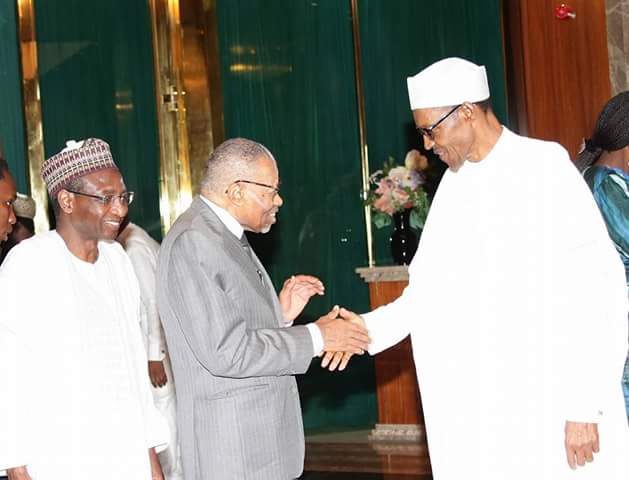
Receiving, Dr. Ali Madani, the President of the IDB Group at the State House on Monday, President Buhari commended the bank for supporting several developmental projects across the country.

The President acknowledged that the bank has funded several people-oriented projects in Osun, Kaduna, Jigawa, Niger, Katsina, Kano and Ebonyi states, demonstrating its ``soft spot and robust support’’ for Nigeria.

‘‘We can’t thank you enough for the height you have achieved for the bank in 41 years. Now that you are about to retire, we thank you for the quality leadership which the world has recognized,’’ the President said.

President Buhari also expressed appreciation to the IDB Group and other countries for extending their assistance to Internally Displaced Persons in the North-East.

The President assured the visiting IDB chief that Nigeria, a major financier of the bank, will meet all its obligations to the development institution within the shortest time possible.

The President highlighted efforts of the current administration at diversifying the economy with emphasis on agriculture and expressed strong optimism that Nigeria will achieve self-sufficiency in rice and sugar; and export both commodities in the next three years.

In his remarks, Dr Madani congratulated President Buhari on the positive outcomes of the war against corruption and terrorism.

He said the bank is ready to mobilize resources from Arab fund for developmental initiatives of the Nigerian government and the private sector, particularly on agriculture.


The Igbo as a Blessing to Nigeria by Reno Omokri


By Reno Omokri - A Lawyer and was a Special Assistant to Former President Goodluck Jonathan

On the 15th of August 1945, the axis nations fighting in the Pacific theater defeated imperial Japan and two weeks later, Japan formally surrendered to allied forces led by the U.S. General, Douglas McArthur, who formally accepted the signed articles of surrender.

But though the U.S. defeated Japan, they never decimated Japan's great technological and industrial complex. They were visionary enough to distinguish these from Japan's military industrial complex, which they scrapped.

Realizing that Japan was decades ahead of the West in many technologies, the allied powers, led by the US, allowed those industries to remain as a going concern and took the unique step of enacting legislation and policies to enable them flourish.

What they did in Japan, they also did in Europe. In Europe, the US, acting unilaterally, even went a step further by introducing the Marshall Plan through which America sent financial and other types of aid to help Europe (and especially Germany) recover from the ravages of the Second World War.

The point of the allied and American actions in Japan and Europe is that technological advancement belongs to the human race and should not be allowed to suffer because of a quarrel or war amongst humans.

This lesson was thoroughly established in 642 AD when the Library of Alexandria was burnt to the ground during the Muslim conquest of Egypt. 

It has been argued that that act set the world several centuries back in technological advancement and has become something to watch out for during the prosecution of a war.

A war is a quarrel between or amongst people that is settled by means of violence. It is not a quarrel between or amongst technology, so civilized nations have pursued the policy of fighting wars while preserving technology.

Gone should be the days of the scorched earth policy which is why despite the bestiality of the apartheid regime, President Nelson Mandela did not do a Mugabe, but rather left intact White owned farms, industry and universities and only insisted that they be opened to Blacks and other races.

This brings me to Nigeria. I would like to state a fact that will be argued against, but still a fact that even those who would argue against it know to be true.

The Igbo (or Ibo) ethnic nationality of Nigeria are the most technologically advanced Black race on planet earth, bar none!

This is a fact. A fact that was proven to be true for 30 months while they were landlocked in their constantly shrinking enclave known as Biafra.

Cut off from the rest of the world, the ingenuity of the Igbo came to the fore during the civil war as they constructed the Uli airstrip and when that airstrip was bombed, they repaired it in record time and under the most trying circumstances. They would go on to repair Uli not once and not twice.

The Igbos refined petrol from a variety of non fossil fuels, including from but not limited to palm products (from which they also produced diesel) and manufactured surface to air missiles which they also adapted to surface to surface missiles (the Ogbunigwe).

They converted commercial planes to fighter jets and weaponized them. That was no mean feat in 1967.

In fact, when in 2012, the Nigerian Army rolled out the igirigi and promoted it as the first indigenous armored personnel carrier, they were wrong. I am not a Biafran. I am proudly Nigerian. And beyond that, I am a proud dark skinned Black African yet I make bold to say that the igirigi is not the first indigenous APC.

In fact, the first indigenous armored personnel carrier in Black Africa is the Red Devil, built by the Igbos during the Nigerian Civil War.

The Nigerian Civil War ended in January 1970 and the Nigerian Army unveiled the igirigi in July of 2012. If they had converted the Red Devil to their own use, they would probably be talking about a greater feat in the year 2012.

My question is what happened in the intervening 42 years between 1970 and 2012? Why didn't the Nigerian Army integrate the military industrial complex of Biafra into its Defence Industry Corporation of Nigeria, DICON?

Why did we have to reinvent the wheel at great cost in terms of time and money?

The Nigerian Civil War ended on a note of 'no victor no vanquished'. That was a watershed moment inspired by the Christlike mind of General Yakubu Gowon. That gesture is to be applauded.

But why did we as a nation not go the whole hog and take advantage of Biafra's technological advances and integrate her scientists into our Research and Development sector much like the US did with German and Japanese scientists?

That is where we failed as a nation.

I remember growing up as a child and how other Nigerians scoffed at 'Igbo made' electronic products. There was hardly anything including electronics, pharmaceuticals, spirits and wines that the Igbos could not counterfeit.

And rather than our leaders seeing the potential in those products, we all scoffed at them. Igbo made products were a pariah.

Did it ever occur to any of our leaders that if government had supported these technological advancement, Nigeria could have become an industrialized nation today and Igbo made products would have been exported abroad as made in Nigeria products?

It would surprise many that a number of the greatest technological advancement and products that came out of America after the Second World War were the work of German or Japanese scientists!

In an operation code named Operation Paperclip, 1500 German scientists, engineers and technicians were airlifted to the United States and given US permanent US residency and citizenship immediately after the defeat of Germany in 1945. The primary aim of Operation Paperclip was to prevent these skilled men and women from falling into Soviet Russian hands.

Hans Erich (Eric) Hollmann who was one of the fathers of radar technology was one of such scientists airlifted to America.

Kurt Lehovec the pioneer of the integrated circuit systems in electrical engineering is another. He was airlifted to America in 1945 where he became a Professor at the University of Southern California and passed on his knowledge to America's next generation of scientists.

The allies had been having issues with the jet engine and were not able to develop planes like the German Messerschmitt Me 262. But after the defeat of Germany, US forces gave safe passage to Rudi Beichel who went to the US and became an adviser to the US army on liquid propulsion. Other German scientists such as Magnus "Mac" Freiherr von Braun and his brother, Wernher Von Braun helped reverse engineer German jets which led to the development of the US American F-86 Sabres, a plane that helped the US dominate the air during the Korean War.

More importantly, Wernher Von Braun provided much of the know how that helped America build the Apollo spacecraft which allowed America beat Russia as the first nation to get to the moon.

Methamphetamine was invented by Japanese a Japanese chemist, Nagai Nagayoshi and the drug was shared with their German allies and helped their soldiers stay awake and focus. After the war, German scientists helped American scientist synthesize the drug which revolutionized the US health industry.

Why can't we do the same in Nigeria? Can you imagine what our technological base would have been if we as a nation had a policy of patronizing the so called Igbo made products right from the end of the war till today? What if we had absorbed the the Research and Production Organisation of Biafra (RAP as it was then known) into the Nigerian Army Corps of Engineers?

By now, we may have been manufacturing jets and we would not be dependent on foreign nations for weapons to fight terrorists.

This is why I was so disgusted with the minister of science and technology, Ogbonnaya Onu for aspiring, on Nigeria's behalf, to produce pencils by 2018!

I mean this man is the first civilian governor of the old Abia state which today encompasses both Abia and Ebonyi states.

Right there, under his own nose, Nigerians of Igbo extraction, without ANY governmental support, are manufacturing electronics and heavy machinery components and Onu is caught up on pencils!

Onu should visit Nnewi if he knows where it is. Right there he would see a city that does not wait for government. Nnewi people are so industrious that after years of waiting endlessly for government to provide basic amenities, they have built their own roads, have their own power stations and their own water works.

Just like Japan, Nnewi has manufacturers of such things like batteries, pistons, automobiles and other products. These Nnewi manufacturers have built schools for the kids of their workers on site, just like in Japan.

You just need to visit Nnewi or Aba to see what is going on in Nigeria. These guys are Nigeria's most guarded secret because even the federal government is not aware of them.

And the reason why this is so is because these people are Igbos!

It is time for Nigeria to forgive the Igbos for being Igbo and accept them as full partners and equal partners in the Nigerian project and use the entire strength of the Nigerian federal government to provide them the support to fulfill their destiny as the Black African people that are nucleus of the technological advancement of Africa.

Notice I say Africa, not just Nigeria. I don't say this lightly. All over West and Central Africa, Nigerians of Igbo extraction are the backbone of the commercial and technological sectors.

I can say what I have said above without any accusation of self or group interest promotion because I am not Igbo neither am I married to one. I have said the truth as my conscience sees it because I am committed to advancement of the Black Race because as a proud Black man, I know that no black African tribe is as great as the Black Race when it is united.

Monday, 22 August 2016

‘World Waiting To Hear Nigeria’s Stories’


Minister of Information and Culture, Alhaji Lai Mohammed, says the world is eager to hear the nation’s stories through the creative industry and ready to pay a lot of money for it.

The minister said this in Lagos at the inauguration of “My Africa Reality TV Show,” that seeks to promote the African culture, tradition and values.

Mohammed said that his assertion was evident by the runway success of the dance drama ‘Wakaa The Musical’ which was performed to global acclaim in London recently.

He said what was needed was to make creative products of the right quality and accessible to all.

The minister congratulated the organisers and producers of the new reality TV show, adding that he was confident that it would massively succeed.

He said the show was coming at a critical point the country was seeking to lay the proper foundation for a very vibrant and productive economy.

“This show is the type of production that we need at this time, because it promotes other aspects of our economy, it creates jobs and educates our people.

“By the time we conclude the ongoing digitisation of the broadcast industry, we will have opened up several revenue and marketing pipes for monetisation of such shows and a window to the world,” he said.

The minister noted that the free fall of oil prices was a blessing in disguise.

He said the free fall had pushed the country to harness its natural and creative resources to build a new economy that would not be dependent on just natural resources.

Mohammed called on Nigerians to chart a path for the development of the nation’s creative industries.

He said the focus of his ministry was mass creation of jobs and development of skill and managerial abilities of Nigerians.

Mohammed said the ministry would also focus on formalising and growing the export of all aspects of the industry to become a significant foreign exchange earner for the country.

He said it would similarly provide key infrastructure that would encourage local and foreign investments into all the key aspects of the creative Industries.

“We have identified TV, Music and Film production as a major component. We are working on what exactly should be provided, what type of laws, subsidies, financing, infrastructure etc will be required to achieve the desired goals,” he said.

The chairman of the occasion, Dr Adewale Adeoye said the reality TV show would showcase and tell the world the true stories about Africa and correct the distortion being bandied around.

He said the concept was also to promote African culture and tradition through dance, songs, comedy and drama.

The host of the reality TV show, Melvin Oduah said the audition for the first edition would hold only in Nigeria while the subsequent ones would be done across the continent.

http://www.lagostelevision.com/world-waiting-hear-nigerias-stories/

Sunday, 21 August 2016

THE BUHARI THAT NIGERIANS DON’T KNOW


By Folusho Daniel - A Public Commentator

For so long, many Nigerians have been attempting to study and decode President Muhammadu Buhari, using different lenses. Some only had a modicum of clue on who he may be, counting on the code of information they obtained from the media when he first romped into global limelight as Head of State in a military garb.

During that military era, Buhari occurred to a section of expectant Nigerians as a no-nonsense dictator with brazen disposition to power. Pairing in leadership with the late Brigadier Tunde Idiagbon, adjudged as restless, hardworking and unsmiling, made the Buhari’s regime almost a nightmare for Nigerians who took business as usual all through the period he reigned as Head of State.

Nonetheless, many perceived and saw Buhari as a Messiah with the military government he presided over. Nigeria was in rot when he took over in 1983. Indiscipline and corruption were in great synergy to incinerate the glory that Nigeria carried from independence. The sacked civilian government presided over by former President Shehu Shagari operated recklessly. Cabinet members acted like heists with moral bankruptcy while being less patriotic in the judgment of many.

When the Buhari’s military regime came on board, frustrated Nigerians troop to the streets in wild celebration. The reproach thrown up by the rising tide of social vices in all parts of the country after the collapse of Second Republic made the War Against Indiscipline (WAI) launched by his government very compelling. Nigerians were remolded by WAI in conduct and character, while the government enforced discipline all through. From then on, Buhari struck gold in popularity that lingered with him till he got elected as president on March 28, 2015.

Nigeria gravitated towards the precipice under the government of former President Jonathan. In that government, acts of corruption ballooned uncontrollably, leading to growing terrorism, insecurity and other heinous social vices. Then battered Nigerians electorate craved for emergence of a Messiah. Again, Buhari emerged to play the role.

For President Buhari, however, saving Nigeria from imminent collapse entails a fight against corruption, terrorism and the need to re-grow the economy. He also needs to engage the swarming army of the unemployed in Nigeria in the productive sector. These are daunting challenges, which he needs to address in a short time. Yet, Nigerians appear unprepared to appreciate the enormity of the challenge and dilemma that the Buhari’s government faces day and night in efforts to correct the ills of the past, while taking off with the Change mantra.

It is not in doubt that the President has fully addressed his mind to bring about the changes that Nigeria needs. Those who work closely with him attest to his desire and determination to take Nigeria out of the woods. The aggregate view is that the reigning Nigerian president is a man to be fully understood by Nigerians who want to know where he aims to take their country.

Buhari is said to start his day, leaving no one around him in doubt that the ‘change’ that he preaches must start from his own office. The president leads by example. He is said to be desirous of building up institutions that will outlive him. He is also said to depend on his protocol department to operate hitch-free standards on crowd control in the seat of government.

By his body language, President Buhari appears not keen on living the opulence that the presidential power offers. His close aides attest to the fact that the president eats moderately, don moderate attires, and ride in posh-less official cars, while he most eagerly avoids any act likely to generate a scandal.

Although there have been hues on the long list of foreign travels he had made so far, only a few knew that President Buhari, all along, has not been collecting allowances or rather estacodes, contrary to insinuations. He is said to be content with arrangements made for his comforts by host countries. Buhari is also noted to have pruned down the number of officials in his entourage on every trip as a means of saving cost.

Before Buhari came to power, successive presidents saw nothing wrong in subjecting Abuja residents to long grueling hours of discomfort in traffic gridlocks with roadblocks to ease their movements in and out of Abuja. President Buhari has put a stop to that, offering a relief by flying in helicopter to his destinations, most especially to free the traffic along the airport road.

Today, under the government of President Buhari, the railway system is staging a comeback in Nigeria. The government, having launched the commercial operation of Abuja-Kaduna train services, is to commence the second phase; the Lagos-Ibadan rail project already captured in the 2016 budget. As proposed, the rail line will eventually terminate in Kano. All the same, attention is being focused on the growth of Agriculture as efforts are geared towards making Nigeria emerge as the largest exporter of rice product, starting first from Africa. In addition to the gradual return of peace to the North-East ravaged by the Boko Haram war, the government has started the rebuilding process with outpouring of foreign aides to fast track all plans.

As Niger Delta continues to pose a serious question to the growth of the economy, signs are emerging that the ongoing negotiation with militants who blow up pipelines in the oil-producing zone would offer a lasting solution. Also, the synergy between Nigeria and China, the second largest economy in the world looks positive enough to catalyse the growth of the economy based on extant bilateral agreements between the two on trade and investments. The economic challenges it faces notwithstanding, larger economies in America and Europe are beckoning on Nigeria for businesses. Britain, for instance, has started lowering its guard to court Africa, Nigeria in particular as a ploy for overcoming the shock it suffered from Brexit. It is therefore, a matter of time for the fruits of efforts currently being dissipated by the Buhari’s government on economic revival to be felt.

The foregoing suggests that the president who continues to make personal sacrifices is not relenting in efforts to revive Nigeria. In all, Buhari is a president who requires the understanding, support and cooperation of all Nigerians. Therefore, visible and covert efforts towards making Nigeria ungovernable for him by some set of individuals are needless given their tendency to distend the woes of the country with a predictable stifled future.

Friday, 19 August 2016

RUNNING A SUCCESSFUL BUSINESS IN NIGERIA: MY EXPERIENCE

Gabriel Ogbechie


By Gabriel Ogbechie

Good afternoon everyone. My name is Gabriel Ogbechie, I am the Managing Director of Rainoil Limited. Rainoil Limited is a company playing in the downstream sector of Nigeria’s oil and gas industry. We’ve been in existence for about 19 years. The title of our lecture today is RUNNING A SUCCESSFUL BUSINESS IN NIGERIA: My Experience. So, essentially, we will be talking about running a business in this country from my own point of view. I am essentially going to share my own experience; it’s an experience that has worked, but I don’t want to delude myself by saying that is the only way through which it works. But let us learn from my own experience and see what we can get out of it.

I attended the University of Benin. I left the university in 1987. I took a degree in Engineering, I did my Youth Service in Kano, 1987-88. I worked briefly in Kano, then came to Lagos and joined the company called Pricewater House. I was in Pricewater House up until 1992, then I joined another oil company called Ascon Oil Limited. I was on a fixed salary of N30,000 a month. And I asked myself one very simple question: ‘Gabriel, what else can you do to make N30,000 a month?’ I asked myself that question as I believed then and I still believe today that anything you can do to make your salary can take the place of your job. If you are working in an organization; let’s say a bank and they are paying you N200,000 a month. Essentially, what they are saying is give us your time from 8-5, perform these duties and we will give you N200,000 at the end of the month. Anything you can do to make that N200,000 can take the place of your work. So, I asked myself that question: ‘Gabriel, what else can you do to make N30,000 a month?’ And I said if I could sell one truck of diesel, I will make one naira per litre and a truck of diesel is N30,000 litres. If I am to sell a truck of diesel and make one naira per litre margin, I will make N30,000, which was my salary. A truck of diesel, 92,93,94, was selling for N300,000.

We were buying it for nine naira per litre and selling it for ten naira per litre making a one naira per litre margin. So, I said if I could sell a truck of diesel, I will make one naira per litre, which was N30,000. So, I set out to raise N300,000. But first things first, I needed to incorporate a company. So, 1994, I remember that my wife and I went to meet a friend who is a pastor and lawyer. We went to their house one evening and we started bandying names around. ‘Gabriel, why don’t you call it Gab Oil, why don’t you call it this oil, that oil and my friend said Gabriel, you know Rain stands for blessing, so why don’t we call it Rain Oil and I said you know what, you are right, but then instead of Rain Oil, we are going to merge the two together to make one word, Rainoil Limited, and that was how Rainoil Limited, was incorporated in November 1994. I got my certificate of incorporation, put it in the drawer and I called it step 1.


Remember, I had a hypothesis. The hypothesis was that if I could sell a truck of diesel in a month, I will make N30,000. So, I set out to raise N300,000. I didn’t have the money, I wrote proposals, I went to those who I knew had the money. I was so sure that it was going to work, but all I heard was come here today, come here tomorrow. Stories!

So, I learnt my first lesson: people rarely give money to those who don’t have. Do I have a witness in the house? (All: Yeah)

My office was in Isolo, Ire Akari Estate Road and I had a stockbroker who was on Bank Anthony Way in Ikeja. With as little as N2,000 in my pocket, I will drive from Isolo to Ikeja, meet my stock broker and say buy me 1000 units of First Bank; 1500, I will drive to Ikeja and tell him to buy me 800 units of Nigerian Breweries. By 1996, I was getting frustrated, I couldn’t raise the N300,000. One evening, I brought out my capital market file and I started itemizing all the stocks one by one: 1000 units of 7UP at 70k per share, N7000;, 2000 units of First Bank at N6 per share, N12,000; I itemized the stocks; it went into 2 pages. When I summed it up, I was surprised, it came to N497,000. I was shocked. Those were the days of shares certificates, not these days of CSCS. I gathered the shares certificates, took them back to the same stockbroker, he verified the ones he could verify, sold the ones he could sell and at the end of the day, I had my N300,000.

Now, recall that I had a hypothesis that if I sell a truck of diesel, I would have N30,000. So, I needed to go into the market place now to test this hypothesis. I went to a company in Ogba called First Aluminium. I had a classmate in the university who was working there. So, he introduced me to the purchasing manager, a man called Mr. Ojo. I was the sales man; I’m still a sales man. So, I had no much challenge. All I needed was for Mr. Ojo to give me an LPO to supply them 30,000 litres of diesel at N10 per litre, making 30,000. So, Mr. Ojo told me to come on this faithful Tuesday and pick my LPO. So, this day, I got to First Aluminium, very excited. ‘Ehn, Mr. Ojo, what’s up with the LPO?’ He said, ‘Gabriel, the LPO is not ready’. I said why? He said GM. I got up, he thought I was leaving. First Aluminium had a GM, his office was down the corridor, a man called… I didn’t know him as a person, but I knew him by reputation. So, I approached his office. He had a secretary who used to sit by the right side of his door. I knew that if I made the mistake of telling that secretary that I wanted to see the GM, that would have been the end of it. So, I approached the door. ‘Good afternoon ma’. Before she could raise her head to see who was greeting her, I had opened the door to the GM’s office. ‘Good morning sir, my name is Gabriel Ogbechie, my LPO is on your table. Please…’ He said from which company, ‘I said Rainoil’. He said, ‘Which one is Rainoil? We only buy from Mobil, Total and Unipetrol’. I did all the marketing I could do that day, he wasn’t ready to sign the LPO, Gabriel Ogbechie wasn’t ready to go anywhere. He was seated, I was standing. At some point, he got tired of me. He wanted to leave me in his office, so he got up. As he approached the door, I just used my body and blocked the door and said to him, ‘Help a young man who wants to grow, sign this LPO’. He looked at me long and hard, went back to his table, signed the LPO and said, ‘I don’t want to ever see you in my office again’. I said thank you very much sir.

I took this LPO, we made the supply. By the time we made the supply, price had moved; instead of N30,000, I made N45,000. I was so excited. We got the cheque December 1996, I cannot forget. It was an SGBN cheque. The cheque drawn on Societe Generale Bank, Oba Akran branch. You know when you start a business from the scratch, you remember some very minute details. By the time the cheque cleared, Christmas had come. 1996, we went on Christmas break, came back in January, did the second supply. This time, it was to Limca, on Abimbola Way, in Isolo. They paid cash, margin N60,000. It was working. The third supply was to one company called United Spinards, on Apapa-Oshodi Express Road. Margin N25,000. It was working. Meanwhile, I was still on my job. Warren Buffet, in one of his books, says if you want to test how deep a river is, you don’t go with your two legs. But by May 1997, it was clear that it was sustainable. So, I left my job to face the business squarely. From that singular seed of N300,000 in 1997, we’ve been able to grow the business to what it is today to the glory of God.

Today, Rainoil Limited, we own about 40 petrol stations spread across this country. We own a fleet of about 80 tank trucks which move petroleum products across the country. First thing first: a lot of people start their business because they want to be their own boss. Another reason why a lot of people start their own business is the economy; maybe the economy just thrusts entrepreneurship on you. In 2008/2009, when banks had a lot of problems that forced the consolidation, a lot of people lost their jobs, people who didn’t plan to do something for themselves suddenly found themselves on the streets. So, they had to do something for themselves.

Another reason of course is financial independence. If you run your own business, I mean, you have your own destiny in your own hands, your income is entirely up to you. My people say, When you are in paid employment, what Igbo man calls “money that is counted” (Ego aguu onu). When you are in paid employment, even if you earn N100 million per annum, which is huge, the salary is still a finite sum. Somebody still has to count it, to say this money is complete. But if you are running your own business, your income is entirely up to you. Another reason is freedom from 8-6 work. 

Another key reason people start their businesses is also to follow their passion. When I look around this hall, I see people like Zeb Ejiro, I can see Wunmi Obe. I mean, these are talented artistes. People who have followed their own passion. Then, in the 90’s, everybody used to tune their radios to listen to Larry Izamoje, and then I used to be confused if he lived in Lagos or Abeokuta. I mean, he could be commuting to and fro, Lagos to Abeokuta. All this is driven by passion. So, I am not surprised that he is successful and has gone ahead to build Brila FM, which is focused mainly on sports. He followed his passion.

Now, what kind of business should people go into? I tell people, the most important thing you need in any business you want to do is knowledge. A lot of people think it’s capital, but it is knowledge. When you put knowledge in front and capital is trailing knowledge, what tends to happen is that the knowledge acts as a protective shield over the capital. When you put capital in front and knowledge is trailing capital, what tends to happen is that you lose the capital to acquire the knowledge and what happens is we say you have learned the hard way. May it not be our portion to learn the hard way. (All: Amen).

You see, there is money in this country. I love this country. There is too much money; money begging to be made. You need to see it. You see, what we sit down here and can’t see, expatriates come from miles away to pick money on our streets. There is money. Many of us here are Christians. The Bible says whatsoever you lay your hands on shall prosper. The key thing is lay your hands on what you understand. I went into the oil business because I worked in an oil company for 5 years. I didn’t have money then, but I saw money being made, I had the knowledge, I knew that if I could lay my hands on that magical N300,000, I would find my way, I would be able to navigate my way.

Tony Okoroji is here. He is a musician, he has got the talent and what he is doing is about music. I see a lot of Nollywood artistes here. These are people, they have the talent, the knowledge, they are working around the movie industry because that is the knowledge they have.

The other thing I want to talk about is how you can raise capital. A lot of people say there is no money. I tell people, first things first. If you want to raise capital, raise capital from personal savings. I will ask you a very simple question: what is the difference between N50,000 and N40,000? A lot of people will say N10,000. The next question I will ask is the person who earns N50,000, at the end of the month, naturally, he is broke; the person who earns N40,000, at the end of the month, he is also broke. But he is not dead. If you are the guy who earns 40k, at the end of the month he is broke, but he is not dead, so why can’t the guy that earns N50,000 save N10,000? It’s consumption pattern. Too many people are eating both their fruit and their seed. You see, very pretty lady, I like that your bag. It’s a pretty bag. I hope you agree with me? They say it’s a Chanel bag. It’s 100k, the other lady is carrying a bag, they say it’s a DG bag, it’s 150k. What is the difference? They are all bags. Somebody is wearing a shirt, he says it is Tommy Hilfiger, another one is YSL. What is the difference? They are all shirts. People are eating their fruit and their seed. But you see, there is what I call the mango principle. Let’s take the mango fruit for example. When you eat a mango, you enjoy it, at some point, you see the seed. Are you supposed to eat the seed? No! You can’t eat the seed. You see, that seed, whether you consciously till the ground and plant it or you throw it away, as long as it touches sand, it germinates and when it germinates, it gives you another mango tree. That, not only gives a complete fruit of mango, but gives it to you year after year, in perpetuity. But what is happening is that too many people are eating both the fruit and the seed. If you earn 50k and can’t save 10k, if you earn N500,000, you can’t save N50,000, because as your income increases, so does your taste and your appetite expand to accommodate that extra income. So, you need to save. People think that banks don’t give loans, but banks give loans if you understand the banking industry. Banks are desperately looking for people to give money to because banks won’t make money except they give out loans. The only thing is that you start your business with equity. That word capital stands for owner’s equity. Banks don’t give you capital, banks bring debt into the business. You start your business with your own equity, as the business begins to expand, you gradually begin to introduce debt into the business, to help you grow the business. You know, when you go to the bank and the bank says go and give me your one year bank statement, what the banker wants to see is you’ve been trading with N5 million; what have you done with N5 million? So, for the past one year, what is your credit and debit in your account? You go to the bank and say I’ve been dealing with N5 million, but in the past one year, I have been able to make extra N5 million, then I now have N10 million; if only you can give me N10 million, I can make N30 million. You don’t just walk into the bank from day one and say give me loan, I want to start a business. It’s difficult.

Another one, of course, is investors. You can raise capital through investors. You can get people to come and invest in your business. If you have a wonderful business idea, you can sell it to investors, if you are able to convince them. Of course, they can put money in your business. Another one is family and friends. Typically, if you want to start a business, the first person you sell your business idea to is your wife or spouse or siblings. If you don’t get support from your immediate family, then you have a very long way to go. For the employee, money is for consumption; people who are in paid employment, once they collect their salaries, what comes to their mind is, I want to pay my rent…

I tell people, money, for me, means nothing. It’s just a figure. N100 million, N200 million. It’s nothing, it’s just a figure. You must be able to see money and keep your cool and you must have the right mindset about money. For the entrepreneur, money is for production, for the employees, money is for consumption. People who are in paid employment, once they earn their salaries, what comes to their mind is I need to pay my rent, I need to keep a little bit of savings here, spend money on this. The enterprenuer always thinks of the next project; what do I do next with this money? I will give you an example, just imagine, you have somebody who is into real estate. You are into real estate, you are trying to build an estate in Badore, you’ve been able to acquire the land with your own money, you’ve brought your surveyor, your QS, you’ve done the design, they’ve costed it, it’s going to cost N800 million to develop the estate and then you go to the bank and ask for your balance, they scribble it for you, N200 million, you have N200 million in the bank, the project you want to do is N800 million. Do you have money? (All: Yes).

What makes you think he has money? A man wants to do a project of N800 million and he has N200 million in the bank. That guy is so broke. You have no idea; he is broke to the tune of N600 million. He doesn’t have money, because he is thinking of the project he wants to do. So, you must have the mindset and truly, he doesn’t have money and you know the funny thing is that when he finishes that project, he begins to think of the next project to do. Businessmen always think of the next project. You always keep thinking, because that is the only way to grow the business. I tell people, you either grow or you die. There is no remaining static. The only way to grow is to keep investing in the business. You must keep regenerating the business. The next thing is that you must keep your earnings in the business. If you are running a business, as you make money, ensure you don’t consume all what you are making. Keep your earnings in the business.
Rainoil is a company that we have grown largely with internally retained earnings. We make money, we keep the money in the business and we keep expanding the business, from one petrol station to 2,3,4,5, to 6. I mean, I look at the business today and there was no day we went into the market and just acquired like four petrol stations at a go. No, it’s one by one. You see, the beauty of it is that when you have one contributing to the pool, then suddenly you have two contributing to the pool, by the time you have up to ten, you will find out that the rate with which you regenerate yourself becomes faster, because you have more contributing into the pool. Another thing I want to talk about is that you must expand the business. I recall in 1997, I was living in Egbeda, Christmas day 1997, we drove all the way from Egbeda to Allen. Where were we going to? We were going to Mr. Biggs. We got to Mr. Biggs, there was no chicken, no meat pie, no doughnut, it was all finished. Why? In 1997, Mr. Biggs was a big thing in this town. In year 2000, I remember when Tantalizers opened on Allen Avenue, Tantalizers was such a big deal that if you go to Tantalizers then, there was a camera man there just to take pictures that you came to Tantalizers to eat fried rice. How many of you here remember? (All: Yeah).

Oh, we must have a bit of history because if things unfold too fast before us, if we are not careful, we miss some of those little things. But you see, today, if you go to Allen, there is Mr. Biggs, there is Tantalizers, there is KFC; going further down to Opebi, there is TFC, Sweet Sensation, name it. Whatever location you find yourself, it’s only a matter of time, competition will catch up with you. Any business you are doing, any location you find yourself, it’s only a matter of time, competition will catch up with you, because as you are making money, people are watching. Ah! This guy has a fashion shop on Akin Adesola, that place is booming. Before you know it, fashion shops will come around you. I remember around year 2005, we opened a petrol station in Asaba. This petrol station was a hit, we were selling 45,000 litres of fuel a day. So much fuel, so much money. We were excited, but the moment we opened it, we moved to the next location. Today, that petrol station struggles to sell maybe 20% of what it was doing then. Why? Because if you go there today, there are three petrol stations to the left of it, another four to the right and maybe five opposite the petrol station. Why? Because as that petrol station was doing well, the market was taking notice. I remember in 2010, we went to a place called Oghara in Delta State to build a tank farm. Then, Oghara wasn’t well known. Today, if you mention Oghara, everybody knows where Oghara is on the petrol import map in this country. But then it was a novel location. I remember when I fly into Benin then, and I am driving to Oghara, I will be laughing. I will say when will the industry realize this location? But in Oghara, at our gate in Oghara today, is a dual carriage way; at our backyard in Oghara is our own jetty, our own sea port. So, ships come all the way from abroad and anchor at my backyard in Oghara to discharge petroleum products. It’s a wonderful location. I will be laughing. Of course, when we commissioned the place in 2011, it was an instant hit, but you know what, we didn’t just sit down in Oghara and say this is where God has buttered our bread and this is where we will remain, even though it was an instant hit. We immediately started looking for another location. Within the next three years, we had gotten a location in Calabar, built another tank farm and moved on. Today, I go to Oghara; when we went to Oghara, we were practically the first and the only one. Today, there are eight tank farms already completed and functioning and maybe another five still under construction. But we don’t wait for competition to catch up with us. We have moved on. We’ve moved to Calabar. The one in Calabar, we have completed it and we have moved on. So, you must branch out. Don’t wait for competition to catch up with you. Then, of course, you also need to have what I call staying power. You know, as they say, hustle while you wait. Even when nothing seems to be happening, remain in the business. When you are in paid employment and you are on a fixed salary, they are paying you six million naira per annum, your income is N500,000 every month, it is fixed, it is certain like that every month. Companies don’t make money like that. When a company makes N120 million in a year, it may not make that next year. Some months, it may make N20 million, another month, it may lose N1 million, but at the end of the year, somehow, it adds up. So, it is staying power that keeps you going when you are running your business, keeps you going when nothing seems to be happening. Because you know, as they say, there is no going back to Egypt. You don’t put your hands on the plough and look back. Once you take that step of faith, that transition, leaving your paid employment to going to run your own business, you must keep looking forward. There is no going back.

On that note, I want to say thank you very much

Thursday, 11 August 2016

Ambode Commissions First State-Owned Helipad for Medical Emergency in Nigeria


Lagos State Governor, Mr. Akinwunmi Ambode on Thursday commissioned the first state-owned Helipad for medical emergencies in Nigeria at the Lagos State University Teaching Hospital (LASUTH), Ikeja, adding that the upgrading of the 247-bed and five Theatre Suits for pregnant women, popularly called Ayinke House, would be ready for use by 2017.

Governor Ambode, who also inspected medical facilities at the LASUTH complex, said as part of efforts to transform the health sector in the State for optimal performance, the Bola Tinubu Health and Diagnostic Centre will soon become operational, while approval had been granted for the rehabilitation, upgrade and bulk purchase of medical equipments required in 20 Secondary and 21 Primary health facilities across the State.

“This Helipad being commissioned today is a lifesaving asset and critical complement to the efficient functioning of this Unit and other emergency services being rendered by the State. The Helipad will also aid the movement of patients from remote areas where healthcare facilities to provide the level of emergency medicine required are not readily available.

“Over the years, we have witnessed emergency situations which require timely movement of victims to appropriate medical facilities. Keeping in mind that every minute matters in securing the lives of people involved in these incidents, the usual movement by road is not the best option in such situations. Helicopters have therefore become an efficient and reliable option which can only be made possible with the availability of helipads within the hospital environment.

“Given the status of LASUTH, as the State flagship tertiary health institution, offering referral services for other public and private medical institutions, it was obvious the helipad had to be located here,” the Governor said.

He recalled that barely a month ago, a 27-bed Critical Care Unit was commissioned in LASUTH to provide life and organ support system for critically ill patients who require intensive monitoring and post-operative treatment, adding that the Helipad would go a long way to facilitate medical evacuation and air ambulance transfer of patients to Trauma Centers.

According to Governor Ambode, the provision of the facilities were consistent with the commitment of his administration to raise the service delivery capacity of LASUTH and other health facilities in the State to international standards to save lives of the people.

He said aside the fact that government will intensify efforts to acquire an Air Ambulance to complete the cycle, the Helipad would be operated by specially trained personnel who will give 24-hour service, guarantee expert medical care during emergency transfer and safe landing at all times.

The Governor also said with the recent execution of a Memorandum of Understanding with selected investors, the State is on the verge of becoming a hub for medical tourism once the Medical Park at the old School of Nursing, Ikoyi comes on stream.

“With the support of our hardworking and dedicated personnel in the health sector, we are confident that we will achieve our set objectives in the health sector, save lives and guarantee a healthy State,” the Governor said.

The Governor, while inspecting the Intensive Care Unit, Faculty of Basic Medical Sciences and the Ayinke House at LASUTH, also announced termination of contracts of all abandoned projects at the complex, saying that his administration would not allow such to happen any longer in the State.

Earlier, the State’s Commissioner for Health, Dr. Jide Idris said by the commissioning of the Helipad, LASUTH was now on the verge of being elevated as level one Trauma Centre, adding that the Helipad was the first to be certified in the country for any State Government.

Also, the Chief Medical Director of LASUTH, Professor Adewale Oke said the Helipad was an eloquent confirmation that Governor Ambode is an achiever and deserved to be commended.

He also announced that Governor Ambode has directed that motorists should not be charged for parking at LASUTH.

Monday, 8 August 2016

I got into musical organ business by adventure – Delano


Dark skinned, and 6.1 meter tall Lanre Delano, is the chief executive officer of Church Organ Projects In Nigeria (CHOPIN) and the Organ & Music Magazine O&MM. He is the representative and sole dealer of the world-leading organ manufacturing company, Allen Organ Company of USA.

Dressed in a cream linen free styled short sleeve shirt and a black pant trouser with a panama cap this afternoon, he exudes confidence as he bares his mind on his musical organ business and childhood. The University of Ife (now Obafemi Awolowo University) music major in this chat with The Guardian, spoke about how he got into the business of organ installation.

Asked what sparked up his interest in music and how got into it, Delano said: “My interest in music dates back into my childhood and I was favored to have very understanding parents who encouraged me fully to study music since that was my only major and academic interest.

“One of the encouragements I had was, being allowed to go to watch and listen to Fela Ransome-Kuti at the shrine. My father insisted I studied music formally by sending me to Pa Kobinna Creppy at Kose Lane, Lagos where I obtained my Grade 5 ABRSM in February 1978. My other teacher was Mr. Kayode Oni, who taught me at the music department at the Polytechnic Ibadan in 1977 before I gained admission into University of Ife as one of the first set of two students to start the music degree programme in 1978.

“I was under Prof Adetunji Vidal, who was the head of department then at the University of Ife (now Obafemi Awolowo University). In 1983, I did my NYSC with the Nigerian Police Force Band Ikeja under the then Director of Music, Police Commissioner Ben Odiase, who composed the present national anthem. After my Youth service, I applied to join the music section of the Nigerian Police Force. I went through all the physical drills and was employed as a cadet Assistant Superintendent of Police on Grade Level 08. Unfortunately and to my surprise, I was posted to the general duty department of the police force because of my physique. I had to leave the force because they did not accept my deployment to the music department,” he stated.

According him, he would forever grateful to his parent, who he described as average income earners with a deep love for music, and they had hoped to develop the same keen interest in their six children.

“To achieve this,” he said, “my dad bought an upright piano and hired a private music teacher. I wasn’t too academically inclined but I was very restless and showed keen interest in music. Though my sister and brother played the piano, I was the most involved. We used to play the organ at the church morning and evening services as well as special services for Christmas.

“My mother believed I had special talent for music, though I was often distracted by other things due to my adventurous nature. Sometimes, while playing the piano to my mother’s listening pleasure, she would just be getting in the groove of the music and I will suddenly excuse myself with a flimsy reason and never return till the music wore off her.

“Some people once said my parents took a risk by allowing me study music in the higher institution as against more glorified courses like medicine, law or architecture. Today, the story has changed because I have brought a lot of honour to my family through music and my parents are very proud of what I have achieved and me.”

On how and when he did get into the organ music business, Delano says its a question he has continuously asked himself because he did not set out to do organ business. He said, “I knew nothing about organ business, I never wrote a feasibility study to start organ business, never worked in an organ company, nor knew anybody working in an organ company. Though I am one of the first two graduates of music from the University of Ife, we never had a course on organ studies need less say having an organ in the department.

“Yes, I like the sound of the organ which I got fascinated about in my church, St Jude’s Ebute Meta, now Cathedral of St. Jude’s. That was all. I admired the pipe organ in a few other churches like St Peters, Aremo Ibadan, Cathedral Church of Christ Marina in Lagos, and Methodist Church of the Trinity, Tinubu.

“It surprises people when I tell the truth that I never saw a digital organ in my life until 2001 at a small good and appliances exhibition in Dietzenbach, Germany. However, I have been in the business for fourteen years now. My company CHOPIN – an acronym for Church Organ Projects In Nigeria, was founded in 2002 and I sold my first church organ a week after the launch of the company.”

Delano noted that classical music is not as popularly embraced in this part of the world like other climes like the highlife, hip-hop and Juju music because it is not our culture. “Despite this, we still have an appreciable number of people who love, listen to and patronize classical music. It is a western music and of course it cannot be as popular as the pakurumo or Juju or highlife music, but there is enough market for it,” he stated.

He continued: “Church Organ business in Nigeria is developing rapidly mainly because the interest in organ music has been rekindled especially in churches. CHOPIN is trying to create more interest in classical and contemporary music. We organize concerts and events. Although we may not get the kind of crowd that the likes of Sunny Ade or Davido will get, we have a sizeable audience and we are contented with that.”

With over 74 installations in Nigeria, across organisations like MUSON and churches, orthodox and Pentecostal, and a few individuals installations, worthy of note is the installation at the Redeem Christian Church of God in Aso Villa, where the Vice President worships.

For Delano, the project is remarkable because of the caliber of personality involved. “It is really a thing of joy for me and a landmark because that single job has fetched us several referrals,” he said.

“Another notable installation was the one we did for the MUSON in Lagos about six years ago. We organised the first organ recital at MUSON Centre, Onikan on April 27, 2002 to formally launch the company, and this paved the way for the purchase of its first organ to be featured at the MUSON Centre and into the teaching curriculum for the MUSON School of Music.

“Although it was a small organ but it is a landmark for us because we were the first to organise the first organ recital in MUSON and that helped greatly in developing the interest and awareness for organ music in Nigeria.”

Is business lucrative and competitive? “Yes, lucrative in all its ramifications including it stress,” he quipped, adding that “it is competitive in a way but I am quick to let people know that what CHOPIN is doing and stands for is very different from other organ dealers.

“Based on my experience, I have categorised the competition into three. First, there are product competitors made up of representatives of other organ brands that jostle for the attention of the customer and try to convince them against choosing the Allen organ.

Second, I encounter in-house competition from members of the decision-making committee that try the influence the purchase of another organ brand other than the one I represent, mostly because of their selfish interest and the business stakes they might have with the other brand. And thirdly, resistance might also come from certain antagonists who have no vote of confidence whatsoever in CHOPIN or my organ brand.”


http://guardian.ng/features/youthspeak/i-got-into-musical-organ-business-by-adventure-delano/

Friday, 5 August 2016

Nigerians In Diaspora Making Positive Waves – Dabiri-Erewa


The Senior Special Assistant to the President on Foreign Affairs and Diaspora Hon. Abike Dabiri-Erewa, has said that Diaspora Nigerians are making positive waves all over the world because Diaspora people has become a global force to reckon with.

Dabiri-Erewa made the assertion in a keynote speech in Abuja at a one-day Diaspora Innovation Institute and Disruptive Africa Expo and launching of Diaspora membership ID card in collaboration with Centre for Management Development (CMD).

In a statement by her Special Assistant on Media, Abdur-Rahman Balogun, Dabiri-Erewa said, “Nigerians abroad constitute a large pool of skilled, experienced and well-trained human capital which could provide the critical mass needed to drive the country’s growth’’.

Dabiri-Erewa said with 26 countries of the world having full ministries or commissions on Diaspora, Nigeria cannot be alienated but to key into world Diaspora development.

“With official $21 billion remittances from Nigerians in the Diaspora yearly, President Muhammadu Buhari’s policies on Diaspora seek to reinforce government’s commitment to this increasingly important demographic with a view to engaging them for national development.

“As part of the effort to provide an institutional framework for furthering the involvement of the Diaspora in the affairs of the country, the current Administration created the Office of the Senior Special Assistant to the President on Foreign Affairs and Diaspora, the first of its kind’’, the statement added.


http://leadership.ng/news/544643/nigerians-in-diaspora-making-positive-waves-dabiri-erewa

Wednesday, 3 August 2016

Atlanta ’96: Nigeria made Olympic history as the first African team to win the gold medal in football


Nigeria made Olympic football history by becoming the first African and non-European and South American team to win the gold medal. While the football tournament remained primarily an Under-23 competition, each of the 16 competing countries were allowed to use as many as three overage players in a compromise between FIFA and the International Olympic Committee.

The Nigerians, whom many observers predicted would be the first African side to win a World Cup, showed so much promise and expectations over the previous decade. They won the 1985 Under-16 World Tournament and finished second in 1987. They took third and second, respectively, at the 1985 and 1989 World Youth Championships. But they could never break the final barrier at the higher levels.

Nigeria, coached by Dutchman Johannes Bonfrere, started their path to the final with a 1-0 victory over Hungary and a 2-0 win over Japan before completing the first round with a 1-0 loss to Brazil. The Africans then shut down Mexico and goalkeeper Jorge Campos, 2-0, in the quarter-finals to set up a pair of amazing matches.

Losing in the semi-finals to a favoured Brazilian side that boasted Bebeto, Ronaldo and Rivaldo, 3-1, Nigeria finally woke up in the 78th minute as Victor Ikpeba scored from 20 meters. As time was running out, captain Nwankwo Kanu took center stage, scoring in a scramble in front of the goal in the final minute to equalize. With extra-time barely three minutes out, Kanu fired home the game-winner from 16 meters to complete one of the great comebacks of international football history and in what many observers felt was the greatest Olympic match ever played.

As if trying to top themselves, the Nigerians then staged another miraculous comeback against Argentina in the gold-medal match in front of 86,117 spectators in the Sanford Stadium in Athens, Georgia.

The Argentins held a 2-1 advantage on goals by Claudio Lopez (third minute) and Hernan Crespo (tournament-best sixth goal on a penalty kick in the 50th minute) before the Nigerians equalized on Daniel Amokachi’s shot in the 74th minute. With a minute remaining, Emmanuel Amunike pulled off some 11th-hour heroics as he took advantage of a botched offside trap and beat goalkeeper Pablo Cavallero from point-blank range for the winning goal in a 3-2 triumph. “I guarantee you that as I talk to you now, everyone in Africa is celebrating,” forward Sunday Oliseh said. “There is no sleeping tonight. Everyone will be happy. This is for all the African countries.”

Besides Nigeria, this competition had a number of surprises. Italy, coached by Cesare Maldini, crashed out of the tournament after a disastrous first round. Those results and disappointing performances eventually cost Maldini his job.

Unfancied Japan stunned Brazil in the opening round, 1-0. During a span of several minutes after their 1-1 draw with Mexico, Ghana went through agony and ectasy. They left the field with sullen faces, thinking they had failed to qualify for the quarter-finals. But their faces turned to smiles when Mexican coach Bora Milutinovic told them they had made it.

Brazil, who had won four World Cup crowns but never the Olympic gold, were forced to settle for a bronze medal. The South Americans, spurred by Bebeto’s three goals, strolled to a 5-0 win over Portugual in the third-place match.

Only two years after a successful World Cup, the Olympic Football Tournament proved to be popular in the USA, as it was during the 1984 Summer Games. A total attendance of 1,364,142 witnessed the 32 matches, most games paired as double-headers with the first Women’s Olympic Tournament.


Source: FIFA.com

http://www.nta.ng/news/20160803-atlanta-96-nigeria-made-olympic-history-as-the-first-african-team-to-win-the-gold-medal-in-football/

Dangote Refinery Confirms Lagos As Prime Investment Destination - Ambode


Lagos State Governor, Mr. Akinwunmi Ambode on Tuesday said the largest single line refinery in the world being developed at the Lekki Free Trade Zone (LFTZ) by Africa's richest man and business mogul, Alhaji Aliko Dangote is another confirmation that Lagos is a prime investment destination, saying that the project will positively change the face of oil and gas business in the West African region.

Governor Ambode, who spoke at the LFTZ during an extensive inspection tour of the Dangote Refinery by the Togolese President, Mr Faure Gnassingbe, said the refinery eloquently attests to the fact that there is a positive investment climate in Lagos which has resulted in massive investor confidence.
The Governor said: "This investment (Dangote Refinery) is one of the biggest in Africa today and will have a huge impact on the economy of not only Nigeria but the whole of West African region.

"This refinery, when completed, will be the largest single line refinery anywhere in the world refining 650,000 barrels of crude oil daily.

"Apart from creating jobs, this refinery will contribute immensely to solving the fuel supply challenge in the West African region," Governor Ambode said.

The Governor expressed satisfaction with the level of work done on the project so far, saying that he was happy that a lot of progress had been made.

He commended Dangote for his vision, doggedness and unwavering desire to contribute positively to the growth of the Nigerian economy, as well as his confidence in the Lagos economy.

Governor Ambode said aside the fact that the project confirmed the positive investment climate in Lagos which has resulted in massive investor confidence, he also strongly believes that the future prosperity of West Africa is in collaboration between government and investors, which was why his administration has been working hard to encourage investment in the State.

He reiterated that Lagos is home to all nations, races and creeds, including substantial Togolese population, adding: "I'm positive that we are providing them with the opportunities to get ahead in their endeavors."

Governor Ambode said as a prominent Head of State in the West African region, he was not oblivious of the interest of President Gnassingbe in the Dangote Refinery, adding that the project was one of the emerging opportunities in Lagos State.

While inviting Togolese investors to take advantage of the positive investment climate in Lagos, Governor Ambode said the State is open for businesses, and that his administration, in a bid to encourage investment, had massively invested in infrastructure and security of lives and property.

"Lagos is open for business. We are open to collaboration with the Togolese Government and investors to move our two countries forward.

"Our government is investing massively in creating infrastructure which will support businesses and individuals. We have made huge investment in security and we will continue to ensure that the lives and property of all citizens are secured.

"We will remain partner in progress with all our investors. Our desire is for investors to invest in Lagos, grow their businesses, create wealth and jobs for our people and ultimately grow our Gross Domestic Product (GDP) positively," Governor Ambode said.

Earlier, Nigeria's Minister of Industry, Trade and Investment, Mr. Okechukwu Enelamah said the Dangote Refinery project could best be described as a partnership between private sector and government at its best.

Enelamah commended Dangote for being not only Nigerian champion but champion of Africa with his massive investments and re-investments, which according to him, are creating jobs and growing the economy.

"We need champions and Dangote is a Nigerian champion; he is an African champion; he is also a role model.

"We need many examples and with the repositioning that the Federal Government is doing, we are going to see many more examples," Enelamah said.

On his part, Dangote commended President Gnassingbe for finding out time to inspect the refinery, adding that he was happy with the interest and encouragement being received over the project.

Apart from the refinery, there is also petrochemical, fertilizer and gas plant with daily production capacity of three billion cubic feet of gas which are being developed by the Dangote Group, all in one location.

Some eminent dignitaries that participated at the tour include former governors of Ogun, Ekiti and Cross River States, Segun Osoba, Niyi Adebayo and Donald Duke respectively; billionaire businessman and Chairman, Zenon Petroleum and Gas Limited, Femi Otedola, members of the Lagos State Executive Council, among others.


Saturday, 30 July 2016

NUC Approves "University of Africa"


The National University Commission (NUC) has approved the University of Africa as the 43rd state university in the country.

Its approval followed the formal presentation of the relevant gazette law, academic brief and physical masterplan as well as the satisfactory report of the advisory resource assessment visit by the commission.

The University of Africa is an initiative of the Bayelsa State Government, which will, however, run as a Public Private Partnership (PPP), since the state government will only provide the enabling environment, while the financing would come from the private sector.

Giving the nod, through a letter dated 28 of July 2016, the Executive Secretary of the commission, Professor Julius Okojie, while congratulating the state government, noted that, the establishment of the university took effect from the 28th of July, having complied with the basic requirements.

According to Okojie, the University of Africa is also the 143rd in the Nigerian university system.

In a statement by the Chief Press Secretary to the Bayelsa State Governor, Daniel Iworiso-Markson, yesterday and made available to the press, Governor Seriake Dickson had led a delegation of top government officials to the office of the commission in Abuja and were received by executive secretary, who briefed the governor on the latest development and the approval of the university.

The statement disclosed that, Okojie handed over the letter of approval to Dickson during the visit, as he also commended him for the initiative.

In his remarks, Dickson, while thanking the NUC Executive Secretary for the warm reception accorded him and his team, explained that, the University of Africa, Toru-Orua was conceived as a public private partnership and it is designed as a first rate institution of learning that will also attract some of the best teachers from Africa and the world.

He said the university will be funded by its partners and the government would only provide the enabling environment for its establishment.

The Bayelsa State Chief Executive said, there is need for more private universities to be established and they must be fee paying, pointing out that, it is the only way to make funding of tertiary institutions viable and sustainable.

His words "I am here leading this small delegation to present to you these laws passed by the Bayelsa State House of Assembly, establishing a new university that we want to bring about working with the private sector. It will be run on a PPP basis.

It is a University unlike the existing one, it will not be directly funded by the state. Our belief is that moving forward for a university to be sustainable, we must create room for private sector participation and involvement.

The University of Africa, Toru-Orua, is the first of its kind in this country, that is established by government with private sector involvement and it will be strictly a fee paying tertiary institution that will attract students from across the continent and the globe. It will be the model as we encourage more private universities in this country".

http://bayelsa.gov.ng/nuc-approves-university-africa